
When Should You Replace Your Home’s Ductwork? 7 Signs to Watch For
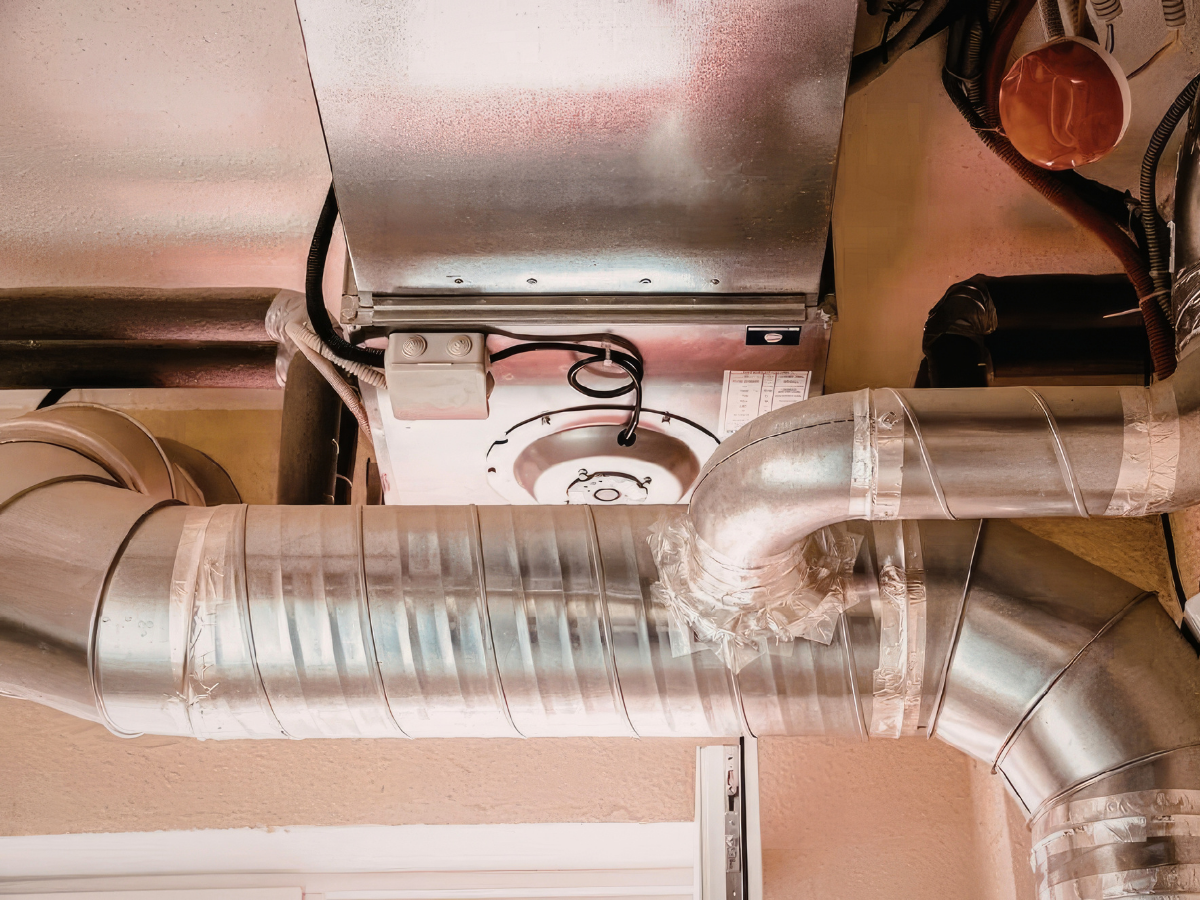
Ductwork is easy to overlook because most of it is hidden behind walls, ceilings, attics, crawlspaces, and mechanical spaces. But when ducts begin leaking, deteriorating, or restricting airflow, they can affect comfort throughout the entire home.
Older or damaged ductwork may contribute to uneven temperatures, weak airflow, excessive dust, longer HVAC run times, and higher energy use. In some cases, repair is enough. In others, replacing sections of ductwork or redesigning the system may make more sense.
At Carmel Valley Heating & Sheet Metal, we provide HVAC repair, maintenance, heat pump, and ductwork services throughout Monterey County. If your home has persistent airflow or comfort problems, evaluating the condition of the duct system can be just as important as checking the heating and cooling equipment itself.
How Long Does Home Ductwork Last?
There is no single lifespan that applies to every duct system.
How long ductwork remains useful depends on factors such as:
Duct material
Installation quality
Age
Air leakage
Insulation condition
Moisture exposure
Pest damage
Attic or crawlspace conditions
Previous repairs
Changes to the HVAC system
Whether the ducts were properly sized in the first place
Some duct systems remain functional for many years with relatively minor repairs. Others develop leaks, crushed sections, loose connections, damaged insulation, or design problems that significantly affect performance.
Age matters, but condition matters more.
7 Signs It May Be Time to Replace Your Ductwork
Replacing ductwork is usually worth considering when problems are widespread, recurring, or difficult to correct with simple sealing and repairs.
1. Airflow Is Weak Throughout the Home
Weak airflow from multiple vents can be a sign that something is limiting air movement through the HVAC system.
Possible causes can include:
Dirty filters
Blower problems
Restricted coils
Closed dampers
Blocked registers
Undersized ductwork
Crushed or collapsed ducts
Significant duct leakage
If airflow is weak at only one vent, the problem may be localized.
If several rooms have poor airflow, the duct system deserves closer attention.
Older flexible ductwork can become compressed, kinked, disconnected, or damaged over time. Metal ductwork can also develop loose joints or other problems.
Replacing damaged or poorly designed sections may restore airflow more effectively than repeatedly patching the same issues.
2. Some Rooms Are Always Too Hot or Too Cold
Uneven temperatures are one of the most common signs that an HVAC distribution system is not working as intended.
One room may stay hot while another becomes too cold. Upstairs spaces may struggle to cool. A bedroom at the end of a duct run may receive very little air.
Uneven comfort can be caused by several factors, including:
Duct leakage
Improper duct sizing
Poor system balancing
Long or restrictive duct runs
Damaged ducts
Insulation issues
Sun exposure
Window performance
HVAC equipment sizing
Duct replacement is not automatically the answer, but persistent room-to-room temperature differences are a reason to evaluate the duct system.
If your comfort problems are accompanied by other HVAC symptoms, our guide to signs your HVAC system needs repair can help you compare possible causes.
3. Your Ductwork Is Visibly Damaged
Accessible ductwork in an attic, crawlspace, garage, basement, or mechanical area can sometimes reveal obvious problems.
Look for conditions such as:
Crushed flexible ducts
Torn outer jackets
Sagging sections
Disconnected joints
Loose fittings
Damaged insulation
Rust or corrosion
Open seams
Improvised repairs
Sections resting in water or against wet materials
Visible damage does not always mean the entire duct system needs replacement.
A single disconnected section may be repairable.
However, widespread deterioration across many duct runs can make piecemeal repairs less practical.
4. Your Ducts Leak Air
Duct leakage can allow conditioned air to escape before it reaches the rooms it is supposed to serve.
Leaks can occur at:
Joints
Seams
Plenum connections
Branch connections
Register boots
Flexible duct connections
Damaged duct sections
Leaky ducts can reduce comfort and make the HVAC system operate longer to meet the thermostat setting.
Leaks in attics, crawlspaces, garages, or other unconditioned spaces can be particularly wasteful because heating or cooling is being lost outside the living area.
Some leakage can be corrected through professional sealing.
Replacement becomes more worth considering when the ducts are old, poorly installed, extensively damaged, or leaking from many locations.
5. Your Energy Use Has Increased Without an Obvious Reason
Higher energy bills do not automatically mean the ductwork is failing.
Weather, utility rates, thermostat settings, occupancy, equipment condition, and insulation can all affect energy use.
But if energy consumption rises while you also notice weak airflow, longer HVAC run times, or uneven temperatures, duct leakage or restriction may be part of the problem.
The U.S. Department of Energy notes that ducts located in unconditioned spaces can lose energy through air leakage and heat transfer when they are not properly sealed and insulated.
That does not mean replacing ductwork will always lower bills by a specific amount.
The first step is identifying where the system is losing performance.
6. The Duct System Is Noisy
Ductwork naturally makes some sound as air moves through it.
New, loud, or persistent noises may point to a problem.
Homeowners may hear:
Whistling
Popping
Rattling
Banging
Vibration
Fluttering
Air rushing unusually loudly through registers
Some noises can come from loose metal, high air velocity, undersized ducts, pressure problems, or improperly secured sections.
A whistling vent, for example, may indicate excessive airflow through a restricted opening.
Repeated duct noise should be evaluated rather than assumed to be normal.
If the problem is caused by poor duct design rather than one loose component, replacement or redesign may be more effective than a simple repair.
7. The Ductwork No Longer Matches the HVAC System
Replacing heating and cooling equipment does not automatically mean the existing ductwork is appropriate for the new system.
Ducts need to move the amount of air required by the equipment.
Problems can develop when:
New equipment is installed on undersized ducts
Ducts were never properly designed
Rooms have been added or remodeled
The home’s layout has changed
Supply or return airflow is inadequate
Previous HVAC modifications were made without updating the duct system
A high-efficiency heat pump or air conditioner cannot perform as intended if the ductwork significantly restricts airflow.
For homeowners considering equipment replacement, the duct system should be evaluated as part of the overall HVAC design rather than treated as a separate afterthought.
Ductwork Replacement at a Glance
Some duct problems can be repaired or sealed, while widespread damage, poor sizing, or recurring airflow issues may make replacement more practical.
| Ductwork Issue | What It May Mean |
|---|---|
| Weak airflow | Crushed, restricted, leaking, or undersized ducts may reduce the amount of conditioned air reaching rooms throughout the home. |
| Uneven temperatures | Persistent hot or cold rooms may point to duct leakage, poor sizing, restrictive runs, balancing problems, or damaged ductwork. |
| Visible damage | Crushed ducts, torn flexible duct, disconnected joints, damaged insulation, corrosion, or sagging sections should be evaluated. |
| Air leaks | Localized leaks may be repairable, while widespread leakage throughout an older or poorly installed system may justify replacement. |
| Repeated repairs | Recurring problems in multiple sections can indicate that continued patching is becoming less practical than replacing problem areas. |
| Poor duct sizing | Undersized or restrictive ducts can limit airflow and may prevent new or existing HVAC equipment from performing as intended. |
| HVAC system changes | New equipment, remodeling, additions, or changes to the home's layout may require the duct system to be resized or redesigned. |
| Damaged insulation | Localized insulation problems may be repairable, but widespread deterioration or moisture damage can require more extensive work. |
| Repair or replace? | Repair often makes sense for isolated problems. Replacement becomes more worth considering when damage, leakage, sizing issues, or poor design affect much of the system. |
Should You Repair or Replace Ductwork?
Not every duct problem requires replacement.
Repair may make sense when:
Damage is limited to one or two areas
Most ducts are still in good condition
Connections simply need resealing
A short section has become disconnected
Insulation damage is localized
The overall duct design is appropriate
Replacement may make more sense when:
Damage is widespread
Flexible ducts are heavily crushed or deteriorated
There are repeated leaks throughout the system
The ducts are significantly undersized
The layout no longer matches the home
The system has major airflow problems
Previous repairs have not solved the issue
Large portions of the duct system are inaccessible or poorly installed
Sometimes the best solution is a combination of repair and replacement.
A contractor may be able to preserve duct runs that are working correctly while replacing problem areas.
What Causes Ductwork to Deteriorate?
Several conditions can contribute to duct damage over time.
Age
Materials can deteriorate as they age.
Flexible duct jackets, insulation, tapes, mastics, and connections may break down, especially in demanding attic or crawlspace environments.
Heat
Attics in California can become extremely hot.
Repeated exposure to high temperatures can be hard on insulation, sealants, flexible duct materials, and other components.
Moisture
Moisture can damage insulation and surrounding building materials.
Persistent condensation or water exposure should be investigated rather than simply covered or sealed.
Pests
Rodents and other pests can damage flexible ductwork and insulation.
Chewed or torn ducts may allow significant air leakage.
Poor Installation
Ductwork can underperform from the beginning if it is:
Improperly supported
Excessively compressed
Kinked
Poorly sealed
Incorrectly sized
Routed inefficiently
Connected improperly
Replacing bad ductwork may therefore be less about age and more about correcting the original installation.
Can Old Ductwork Affect Indoor Air Quality?
Damaged ductwork can contribute to indoor air concerns, although ducts are only one part of indoor air quality.
Leaks in return ducts may pull air from attics, crawlspaces, garages, or other surrounding areas into the HVAC system.
Depending on the property, that air may contain:
Dust
Insulation particles
Odors
Moisture
Outdoor contaminants
Pest-related debris
Visible dust around vents does not automatically prove the ducts need replacement.
Dust can come from many sources.
But damaged return ducts or heavily contaminated duct sections are worth evaluating as part of a broader indoor air quality investigation.
Does Ductwork Need to Be Replaced When You Replace an HVAC System?
Not necessarily.
Existing ducts can often remain in place if they are:
Well sealed
Structurally sound
Appropriately insulated
Clean enough for continued use
Compatible with the new equipment
Providing adequate airflow
However, installing new HVAC equipment is a good time to inspect the duct system.
If the ducts are undersized, leaking, damaged, or poorly designed, connecting new equipment to them may limit the performance of the new system.
This can be especially important when switching to a heat pump or making substantial changes to equipment capacity.
Can You Replace Only Part of the Ductwork?
Yes.
Duct replacement does not always need to be all or nothing.
A contractor may recommend replacing only:
One branch
A damaged flexible duct
A return duct
A supply trunk
A poorly installed section
Ducts serving a remodeled area
Partial replacement can be appropriate when the rest of the system remains in good condition.
The decision should be based on how the entire duct system works together.
Replacing one undersized section without addressing other restrictions may not solve the underlying airflow problem.
How Is New Ductwork Sized?
Proper duct sizing is based on more than the square footage of the home.
The design should consider factors such as:
Heating and cooling load
Equipment airflow requirements
Number of rooms
Room size
Duct length
Number of turns
Available static pressure
Supply airflow
Return airflow
Register and grille sizing
A properly sized system is designed to move the required amount of air without creating excessive restriction or noise.
This is one reason replacing old ductwork with the same size ducts is not always the best approach.
If the original system was poorly designed, replacement provides an opportunity to correct the problem.
Should Ductwork Be Insulated?
Ducts that travel through unconditioned areas such as attics or crawlspaces often require insulation.
Insulation helps reduce heat transfer between the conditioned air inside the duct and the surrounding space.
For example, cool air traveling through a hot attic can gain heat before reaching the room.
Damaged or missing duct insulation can therefore affect both comfort and system performance.
The appropriate insulation depends on the location, duct type, building requirements, and local conditions.
Are Ductless Mini-Splits Better Than Replacing Ductwork?
Sometimes, but not always.
A ductless mini-split can avoid traditional ductwork entirely.
That can make it an attractive alternative when:
The home does not have existing ducts
Existing ductwork is extremely difficult to replace
Only certain rooms need heating or cooling
An addition or ADU needs its own HVAC
Individual temperature zoning is a priority
But a ducted system may still be the better option for a home that already has a workable duct layout and needs whole-home heating and cooling.
Our guide to ductless mini-split pros and cons explains those tradeoffs in more detail.
You can also compare mini-splits vs. central air when deciding between ducted and ductless systems.
How Does Coastal Monterey County Affect Ductwork?
Most residential ductwork is located indoors, in attics, or in crawlspaces, so it does not experience the same direct salt exposure as outdoor HVAC equipment.
Coastal conditions can still matter indirectly.
Homes near Carmel-by-the-Sea, Pebble Beach, Monterey, Pacific Grove, and other coastal areas may experience:
Higher moisture levels
Fog
Damp crawlspaces
Condensation
Marine air entering attics or other building cavities
Moisture around ducts or damaged insulation should be investigated.
The goal is not simply to replace wet insulation but to understand why moisture is present.
Farther inland, warmer attic temperatures can create a different challenge, increasing the importance of properly sealed and insulated ductwork.
What Should You Check Before Replacing Ductwork?
Before deciding to replace an entire duct system, determine what is actually causing the problem.
A professional evaluation may include checking:
Supply airflow
Return airflow
Accessible duct condition
Duct leakage
Connections
Insulation
Restrictions
Blower performance
Filter condition
Equipment sizing
Static pressure
Room-to-room comfort problems
Some symptoms that seem like duct problems may actually be caused by the HVAC equipment itself.
Others may involve insulation, air sealing, room design, or building-envelope issues.
The most useful recommendation comes from looking at the complete system.
How Much Does Ductwork Replacement Cost?
Ductwork replacement cost depends heavily on the home and project.
Pricing can be influenced by:
Size of the duct system
Number of supply runs
Number of returns
Duct material
Insulation
Accessibility
Attic or crawlspace conditions
Demolition requirements
Equipment configuration
Changes to the duct layout
Register or grille replacement
Local labor costs
Replacing a few accessible duct runs is a very different project from redesigning an entire system in a difficult attic.
That is why an on-site evaluation is more useful than relying on one generic per-foot cost.
When Should You Replace Your Home’s Ductwork?
Ductwork should usually be replaced based on condition and performance rather than age alone.
If the system has widespread leakage, crushed ducts, damaged insulation, poor airflow, major design problems, or repeated repairs that do not solve comfort issues, replacement may be worth considering.
For Monterey County homeowners, the goal should be a duct system that supports the HVAC equipment, moves air effectively, and provides consistent comfort throughout the home.
Carmel Valley Heating & Sheet Metal provides HVAC repair, heat pump, mini-split, and ductwork services throughout Carmel Valley, Carmel-by-the-Sea, Pebble Beach, Monterey, Pacific Grove, Marina, Seaside, and surrounding Monterey County communities.
Concerned about the condition of your ductwork? Contact Carmel Valley Heating & Sheet Metal or call (831) 298-9922 to schedule an evaluation.
Frequently Asked Questions About Replacing Ductwork
How do I know if my ductwork needs to be replaced?
Common signs include weak airflow throughout the home, persistent hot or cold rooms, widespread air leaks, damaged or crushed ducts, recurring duct repairs, increased HVAC run times, and ducts that no longer match the equipment or home layout.
How often should ductwork be replaced?
There is no universal replacement schedule. Ductwork should be evaluated based on its material, installation, leakage, insulation, physical condition, airflow performance, and whether it still works properly with the HVAC system.
Can old ductwork make an HVAC system less efficient?
Yes. Leaking, poorly insulated, crushed, undersized, or restrictive ducts can reduce the amount of conditioned air reaching the living space and make the HVAC system work harder to maintain comfort.
Is it worth replacing old ductwork?
It can be when the duct system has widespread leakage, major damage, poor design, inadequate airflow, or recurring problems that cannot be corrected effectively through repair and sealing.
Can ductwork be repaired instead of replaced?
Yes. Localized leaks, loose connections, damaged insulation, or individual duct sections can often be repaired. Replacement becomes more appropriate when problems are widespread or the overall duct design is inadequate.
Should I replace ductwork when replacing my HVAC system?
Not automatically. Existing ductwork can often remain if it is properly sized, sealed, insulated, and compatible with the new equipment. However, equipment replacement is a good opportunity to have the duct system evaluated.
Can I replace only part of my ductwork?
Yes. Partial replacement may be appropriate when only certain branches, returns, or sections are damaged or poorly designed while the rest of the duct system remains in good condition.
Are mini-splits better than replacing ducts?
It depends on the home. Mini-splits can be a useful alternative when traditional ductwork is impractical, but a properly designed ducted system may remain the better option for homes that already have a suitable whole-home duct layout.
Concerned About Your Ductwork?
Poor airflow, uneven temperatures, damaged ducts, or repeated HVAC problems can indicate that your duct system needs attention. Carmel Valley Heating & Sheet Metal can evaluate the ductwork and determine whether repair, sealing, partial replacement, or a larger redesign makes sense.