
Why Is My Mini-Split Icing Up? 7 Common Causes
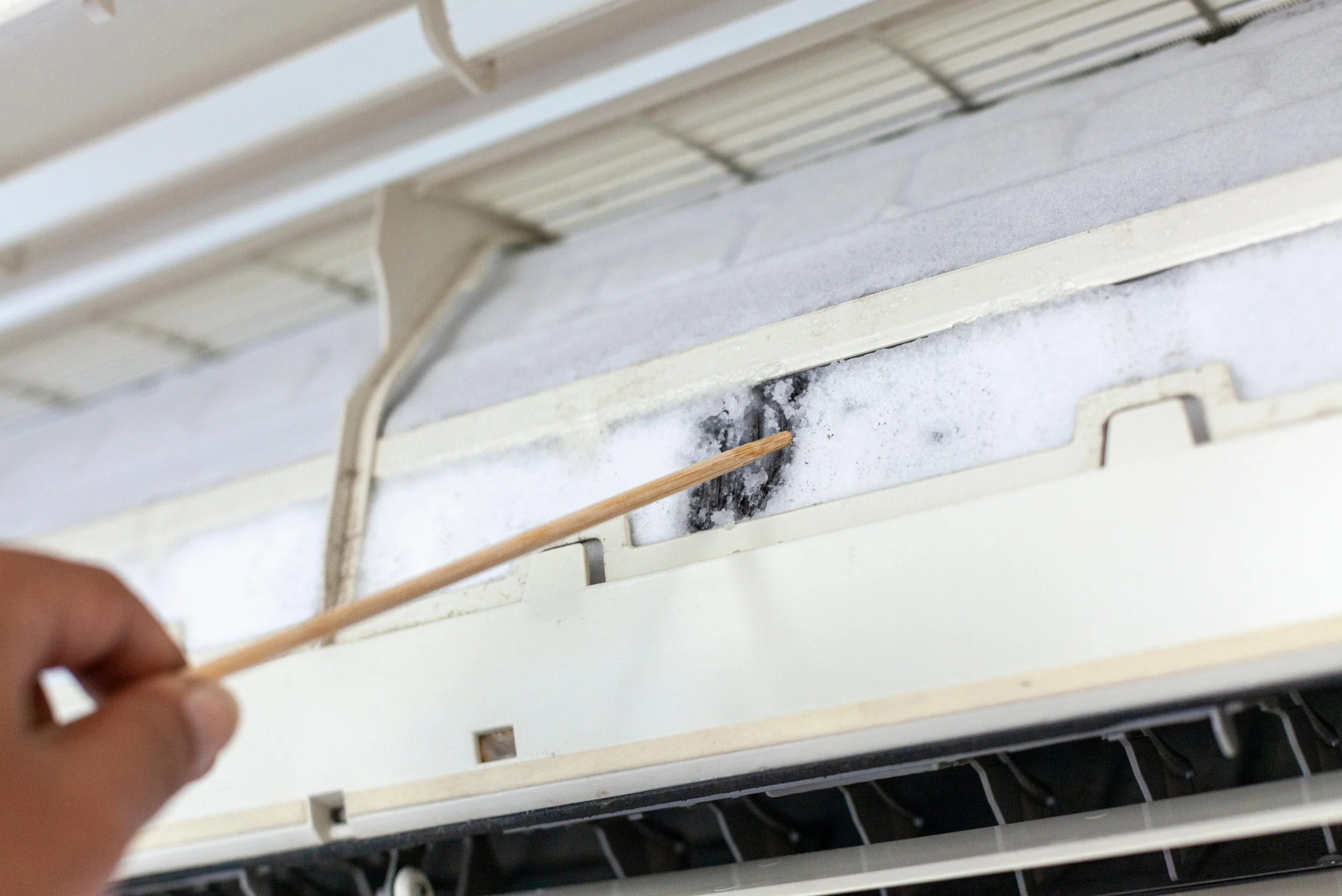
Ice on a mini-split can be confusing, especially when the system is supposed to be heating or cooling your home.
A small amount of frost on the outdoor unit of a heat pump can be normal during cold-weather operation, and the system may periodically enter a defrost cycle to remove it. Heavy ice, recurring ice, or frost that does not clear is different. Ice forming on the indoor unit during cooling can also indicate that something is interfering with normal airflow or system operation.
The cause may be as simple as a dirty air filter, but mini-split icing can also be related to dirty coils, airflow problems, refrigerant issues, fan problems, sensors, or the defrost system.
For homeowners in Carmel Valley and throughout Monterey County, understanding why a mini-split is icing up can help you determine what you can safely check yourself and when the system should be inspected by an HVAC professional. Carmel Valley Heating & Sheet Metal provides mini-split repair and maintenance throughout Monterey County, and this guide explains seven common causes of icing, what may be normal, and when recurring ice needs professional attention.
Is It Normal for a Mini-Split to Have Ice on It?
It depends on where the ice is forming and when it happens.
During heating mode, a ductless heat pump absorbs heat from outdoor air. Under certain weather conditions, moisture can collect and frost can develop on the outdoor coil. Mini-splits are designed to periodically enter a defrost cycle to remove this frost.
A light layer of frost that clears during normal defrost operation is not necessarily a problem.
However, you should pay closer attention if:
The outdoor unit becomes heavily covered in ice
Ice remains after a defrost cycle
Ice repeatedly returns
The indoor unit or indoor coil freezes
Airflow becomes weak
Heating or cooling performance declines
Water begins leaking after the ice melts
The system displays an error code
Persistent icing usually means it is worth investigating the underlying cause.
Why Is My Mini-Split Icing Up?
A mini-split depends on proper airflow and refrigerant circulation to transfer heat. When something interferes with either process, temperatures at the coil can become abnormal and ice may form.
Here are seven possible causes.
1. A Dirty or Clogged Mini-Split Filter
A dirty filter is one of the first things to check when a mini-split indoor unit begins icing.
The indoor unit pulls room air through its filters before moving that air across the coil. As dust, pet hair, lint, and other debris accumulate, airflow through the unit can become restricted.
Reduced airflow can change conditions at the indoor coil enough to contribute to freezing during cooling operation.
Fortunately, this is also one of the easier problems homeowners can check.
If the filters are visibly dirty, proper mini-split filter cleaning can help restore airflow and keep routine buildup from affecting system performance.
If the mini-split continues icing after the filters are clean, another problem may be responsible.
2. A Dirty Indoor Coil
Clean filters help protect the indoor coil, but dirt can still accumulate inside a mini-split over time.
Dust and other buildup on the evaporator coil can interfere with airflow and heat transfer. If the coil cannot exchange heat properly, system performance can suffer and freezing may occur.
This is different from routine filter cleaning.
The indoor coil, blower wheel, drain components, and other internal parts are not areas homeowners should automatically disassemble or clean themselves. Professional mini-split maintenance can include inspection and deeper cleaning of components that are not part of normal homeowner maintenance.
If your filters are clean but the inside of the unit has substantial visible buildup, professional cleaning may be appropriate.
3. Low Refrigerant or a Refrigerant Leak
A refrigerant problem is another possible reason for a mini-split to develop ice.
Refrigerant circulates through the system and allows the mini-split to transfer heat between indoors and outdoors. If the system has an improper refrigerant charge or a leak, pressures and temperatures within the refrigeration cycle can be affected.
Possible signs of a refrigerant-related problem can include:
Ice or frost on the coil or refrigerant lines
Reduced heating or cooling
Long run times
A system that struggles to reach the set temperature
Hissing or bubbling sounds in some cases
Refrigerant does not normally need to be routinely topped off. A low refrigerant condition can indicate a leak that needs to be located and repaired rather than simply adding more refrigerant.
Refrigerant diagnosis and repair should be handled by a qualified HVAC technician.
4. The Indoor Fan Is Not Moving Enough Air
The filter and coil are not the only things that affect airflow.
The indoor fan, or blower, is responsible for moving air across the coil and back into the room. If the fan is dirty, damaged, obstructed, or experiencing a motor or control problem, the unit may not move the amount of air it should.
You may notice:
Weak airflow
Unusual noises
Inconsistent fan operation
Reduced heating or cooling
Ice forming even though the filter appears clean
A fan problem generally requires more diagnosis than basic homeowner filter maintenance.
If airflow remains unusually weak after you have checked the filters and made sure nothing is blocking the indoor unit, schedule professional service.
5. The Outdoor Unit Is Blocked or Dirty
A mini-split's outdoor unit needs adequate airflow too.
Leaves, vegetation, dirt, and other debris can obstruct the outdoor coil and interfere with heat exchange. In winter, snow and ice can also interfere with the unit if buildup blocks airflow around the equipment.
Homeowners can visually check the area around the unit and make sure it is not obviously obstructed.
Avoid chipping ice from the coil or using tools that could damage the coil fins, refrigerant lines, or other components. If the outdoor unit is heavily iced, determine why the ice is forming rather than simply trying to remove it.
6. The Mini-Split Has a Defrost Problem
When a mini-split heat pump operates in cold weather, frost can naturally develop on the outdoor coil.
The system's defrost cycle is designed to periodically melt that frost.
If the system does not enter defrost correctly, does not remain in defrost long enough, or cannot successfully clear the coil, frost can progress into heavier ice buildup.
A defrost problem may involve components or controls such as sensors, electronics, or other parts of the heat-pump system. Persistent outdoor icing can also be related to airflow or refrigerant conditions, so the presence of ice alone does not identify the failed component.
If the outdoor unit repeatedly becomes heavily iced and normal defrost cycles do not clear it, professional diagnosis is appropriate.
7. A Sensor, Control, or Mechanical Problem Is Affecting Operation
Modern ductless mini-splits rely on multiple components working together.
Temperature sensors, electronic controls, fan motors, valves, and other components influence when and how the system operates. A malfunction can cause the system to behave incorrectly or contribute to conditions that lead to icing.
This is particularly important when the obvious causes have already been ruled out.
If the filters are clean, airflow around the equipment is unobstructed, and the system continues to freeze, the underlying problem may require diagnostic testing.
An error code can also provide useful information. Record the code rather than repeatedly resetting the system so a technician can use it during diagnosis.
Indoor Mini-Split Icing vs. Outdoor Mini-Split Icing
Where the ice appears can provide useful clues.
Ice on the Indoor Unit
Ice forming on the indoor coil during cooling is generally not normal.
Possible causes include:
Restricted airflow from a dirty filter
A dirty indoor coil
Fan or blower problems
Low refrigerant or a refrigerant leak
Other mechanical or control problems
The system should not simply be allowed to continue operating while heavily frozen.
Ice on the Outdoor Unit
Some frost on the outdoor coil can be normal when a heat pump is operating in heating mode during cool, damp weather.
The important question is whether the system's defrost cycle clears it.
Persistent or heavy outdoor ice can indicate problems involving airflow, refrigerant, defrost operation, sensors, or other system components.
Mini-Split Icing Troubleshooting Guide
| What You Notice | Possible Cause | What to Do |
|---|---|---|
| Indoor unit icing during cooling | Restricted airflow, dirty filter or coil, fan problem, or refrigerant issue | Turn the system off, let the ice thaw naturally, and check the filters. Schedule service if icing returns. |
| Light outdoor frost during heating | Normal heat-pump operation can cause temporary frost in cool, damp conditions | Watch to see whether the system's normal defrost cycle clears the frost. |
| Heavy or persistent outdoor ice | Defrost, airflow, refrigerant, sensor, or mechanical problem | Do not chip or scrape the ice. If normal defrost does not clear it, schedule professional service. |
| Ice with weak airflow | Dirty filter, dirty coil, airflow restriction, or indoor fan problem | Check and clean the filters and make sure airflow is not blocked. Have the system inspected if airflow remains weak. |
| Ice returns after filter cleaning | Another airflow, coil, fan, refrigerant, sensor, or mechanical issue may be involved | Schedule professional diagnosis rather than repeatedly thawing and restarting the system. |
| Water leaks after thawing | Melting ice or a condensate drainage problem | Watch for continued leaking. Persistent water problems should be professionally inspected. |
Important: A visible symptom can help narrow down possible causes, but it cannot confirm the exact problem. Recurring or heavy mini-split icing should be professionally diagnosed.
Can a Dirty Mini-Split Filter Cause Ice?
Yes. A heavily clogged mini-split filter can restrict airflow enough to contribute to icing during cooling operation.
When a filter becomes clogged with dust and debris, it can reduce the amount of room air moving across the indoor coil. That reduction in airflow can contribute to coil temperatures becoming cold enough for moisture to freeze.
But a dirty filter is not the only reason a mini-split freezes.
If you clean the filter and the ice returns, do not continue assuming the filter is responsible. The system may have another airflow, refrigerant, fan, coil, sensor, or mechanical problem.
What Should You Do If Your Mini-Split Is Frozen?
If you discover significant ice on the indoor portion of your mini-split, continuing to operate the system may make the problem worse.
A few basic steps can help:
Turn the system off. Do not keep forcing a heavily iced system to run.
Allow the ice to thaw naturally. Do not chip, scrape, or pry ice from the coil.
Check the filters. If they are dirty, clean them according to the manufacturer's instructions.
Look for obvious airflow obstructions. Make sure the indoor unit and outdoor equipment are not blocked.
Watch for water as the ice melts. A frozen coil can produce substantial water as it thaws.
Schedule service if the ice returns. Recurring icing usually means the underlying cause has not been corrected.
Do not attempt refrigerant, electrical, sensor, or internal mechanical repairs yourself.
Why Does My Mini-Split Leak Water After It Freezes?
Ice does not disappear when the unit thaws. It becomes water.
If substantial ice has accumulated on the indoor coil, melting can produce more water than the system would normally handle at one time. Water may drip from the indoor unit or appear around the equipment.
A drainage problem can make the situation worse.
Water leaking from a mini-split can also have causes unrelated to freezing, including a blocked condensate drain or damaged drain components.
Persistent leaking should be inspected rather than treated as a normal consequence of operating the system.
Monterey County Conditions Can Affect Mini-Split Operation
Mini-splits throughout Monterey County operate under very different conditions depending on where the property is located.
Homes closer to Carmel-by-the-Sea, Monterey, Pebble Beach, Pacific Grove, and other coastal communities can experience cool temperatures, fog, moisture, salt air, and marine exposure. Properties farther inland in Carmel Valley can experience warmer and drier conditions.
During cool, damp weather, some frost on the outdoor unit of a heat pump can occur as part of normal operation. What matters is whether the system successfully clears that frost during its defrost cycle.
Coastal exposure can create other long-term concerns as well. Salt air and moisture can contribute to corrosion on outdoor HVAC equipment, particularly for properties closer to the coast.
Local conditions do not mean recurring mini-split icing should be ignored. Heavy or persistent ice still deserves attention.
How Can You Help Prevent a Mini-Split From Icing Up?
Not every mechanical problem is preventable, but routine maintenance can reduce some of the conditions that contribute to icing.
Homeowners can:
Inspect mini-split filters regularly
Clean reusable filters according to manufacturer instructions
Keep furniture and other objects from blocking indoor airflow
Keep vegetation and debris away from the outdoor unit
Watch for changes in airflow or system performance
Pay attention to recurring frost or ice
Schedule appropriate professional maintenance
Filter care is particularly easy to overlook. The appropriate cleaning schedule depends on the equipment, usage, household conditions, and manufacturer recommendations.
Professional maintenance goes beyond the filters by allowing a technician to inspect coils, fans, refrigerant lines, electrical connections, drainage, and overall system performance.
When Should You Call an HVAC Professional?
Schedule professional mini-split service if:
Ice keeps returning after the filters are cleaned
The indoor coil freezes
The outdoor unit develops heavy or persistent ice
Normal defrost cycles do not clear outdoor frost
Airflow remains weak
The system is not heating or cooling properly
You notice water leaking from the indoor unit
You hear hissing, bubbling, grinding, or other unusual noises
The system displays an error code
You suspect a refrigerant problem
The system's performance has noticeably changed
These symptoms can indicate that your HVAC system needs repair, but icing alone cannot tell you exactly which component is responsible.
A professional diagnosis can determine whether the problem involves maintenance, airflow, refrigerant, controls, or a mechanical repair.
Frequently Asked Questions About Mini-Split Icing
Why is my mini-split icing up?
A mini-split can ice up because of restricted airflow, a dirty filter or coil, low refrigerant or a refrigerant leak, fan problems, blocked outdoor equipment, defrost problems, or other sensor, control, or mechanical issues. The location of the ice and whether the system is heating or cooling can help narrow down the possible cause.
Is ice on a mini-split normal?
A small amount of frost on the outdoor coil can be normal while a heat-pump mini-split operates in heating mode during cool, damp conditions. The system should periodically defrost itself. Heavy or persistent outdoor ice and ice on the indoor coil during cooling can indicate a problem.
Can a dirty filter cause a mini-split to freeze?
Yes. A dirty filter can restrict airflow across the indoor coil and contribute to freezing during cooling operation. If icing continues after the filter has been properly cleaned, another problem may be responsible.
Why does my mini-split keep freezing after I clean the filter?
The filter may not be the underlying cause. A dirty coil, fan problem, refrigerant issue, sensor problem, airflow restriction, or another mechanical issue could be involved. Recurring icing should be professionally diagnosed.
Should I turn off my mini-split if it is frozen?
If the indoor unit or coil is heavily frozen, turn the system off rather than continuing to operate it. Allow the ice to thaw naturally and do not scrape or chip ice from the equipment. If the problem returns, schedule professional service.
Why is my mini-split outdoor unit freezing in winter?
Some frost can develop on the outdoor coil during normal heat-pump operation in cool, damp weather. The system should periodically enter a defrost cycle to clear it. Heavy ice that persists or repeatedly returns may indicate a defrost, airflow, refrigerant, sensor, or mechanical problem.
Can low refrigerant cause a mini-split to ice up?
Yes. Refrigerant problems can affect system pressures and temperatures and may contribute to ice forming on coils or refrigerant lines. Low refrigerant can indicate a leak and should be diagnosed by an HVAC professional.
Will a frozen mini-split fix itself?
Normal outdoor frost may disappear during a properly functioning defrost cycle. Recurring or heavy icing should not be assumed to have fixed itself simply because the ice eventually melts. If the underlying cause remains, the ice is likely to return.
Stop Recurring Mini-Split Ice at the Source
A frozen mini-split is a symptom, not a diagnosis.
Sometimes the solution is straightforward, such as cleaning a heavily clogged filter or removing an obvious airflow obstruction. Other times, recurring ice can point to a dirty coil, refrigerant problem, fan issue, defrost malfunction, or another component that needs professional attention.
If your mini-split keeps icing up, has weak airflow, is leaking water, or is no longer heating or cooling properly, Carmel Valley Heating & Sheet Metal provides mini-split repair and maintenance throughout Carmel Valley and Monterey County.
Contact our team or call (831) 298-9922 to schedule service.