
How to Clean a Mini-Split Filter and Why It Matters
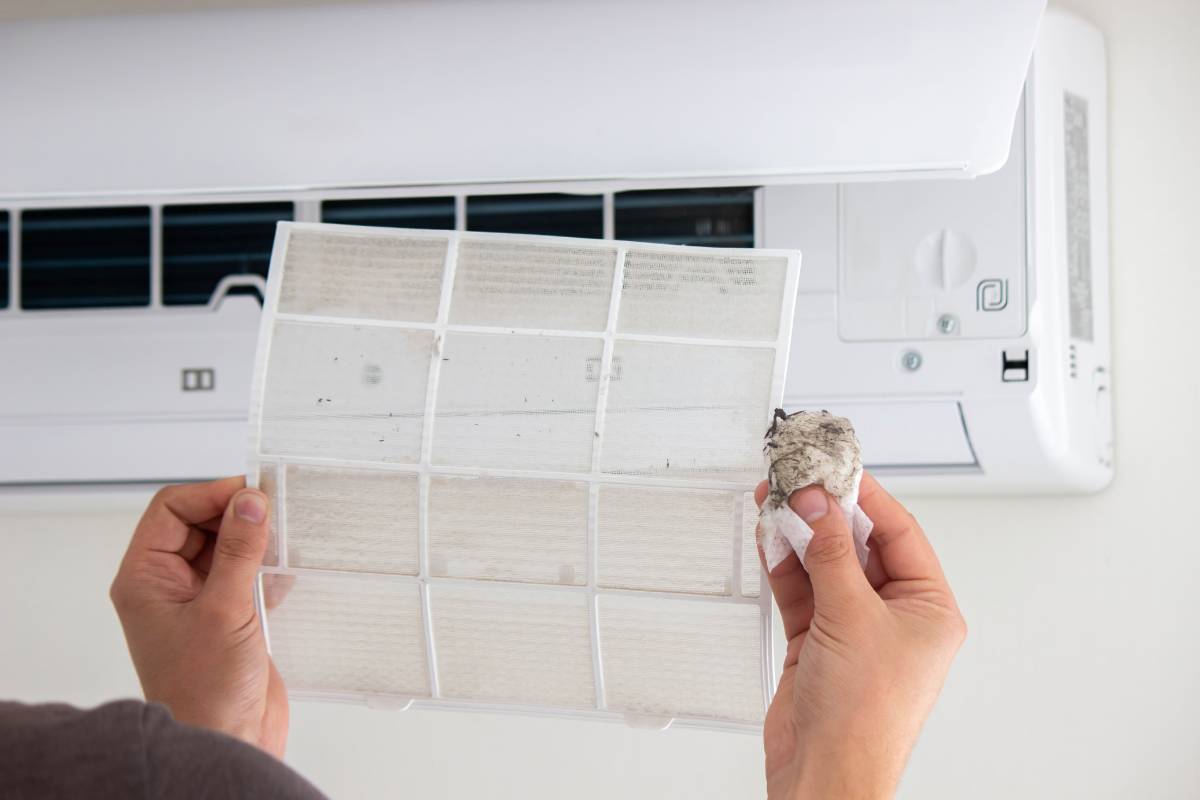
Ductless mini-splits are known for efficient, flexible heating and cooling, but they still need regular attention to keep air moving through the system properly. One of the simplest maintenance tasks homeowners can perform is also one of the easiest to overlook: cleaning the mini-split filters.
As dust and debris collect on the filters inside an indoor unit, airflow can become restricted. The system may have to work harder to heat or cool the room, performance can decline, and neglected filters can contribute to problems such as poor airflow and ice buildup.
Fortunately, cleaning the reusable filters in many ductless mini-splits is relatively straightforward.
For homeowners in Carmel Valley and throughout Monterey County, knowing how to clean a mini-split filter, how often to check it, and when to call a professional can help keep the system operating properly. Carmel Valley Heating & Sheet Metal services ductless mini-split systems throughout Monterey County, and this guide covers the basic filter maintenance homeowners can typically handle themselves.
Why Mini-Split Filter Cleaning Matters
A mini-split indoor unit continually pulls room air through a filter before conditioning and returning that air to the space. The filter helps capture dust, hair, lint, and other airborne debris before it reaches internal components.
Over time, that material accumulates.
A dirty filter can restrict the amount of air moving through the indoor unit. Depending on how dirty the filter becomes and how the system is operating, restricted airflow may contribute to:
Reduced heating or cooling performance
Weak airflow from the indoor unit
Longer system run times
Increased energy use
Dust buildup inside the unit
Ice forming on parts of the system
Additional strain on HVAC components
Proper maintenance also helps ductless mini-split systems operate efficiently, making filter cleaning a small but important part of routine system care.
How Often Should You Clean a Mini-Split Filter?
There is no single cleaning schedule that applies to every mini-split.
As one example, Carrier recommends inspecting and cleaning mini-split filters every 4–6 weeks, although the appropriate schedule varies by system, usage, household conditions, and manufacturer recommendations.
The manufacturer's instructions for your particular system should always take priority. How frequently the filters need cleaning can also depend on how often the system runs and conditions inside the home.
The U.S. Department of Energy’s Building America Solution Center notes that ductless mini-split systems include indoor air filtration as part of overall system design and performance.
You may need to check the filters more frequently if:
The mini-split operates every day
You have pets
The home tends to collect dust
Windows and doors are frequently open
The unit serves a kitchen or another high-use space
Someone in the household is particularly sensitive to airborne particles
The indoor unit is located in an area where debris accumulates quickly
Rather than waiting until performance changes, get into the habit of inspecting the filters regularly. A quick visual check can tell you whether dust and debris are beginning to accumulate.
If you are unsure how frequently your particular model should be cleaned, check the manufacturer's maintenance instructions.
Mini-Split Filter Cleaning Quick Guide
| What to Check | What to Do | When to Call a Professional |
|---|---|---|
| Filter condition | Look for visible dust, lint, pet hair, or debris across the filter surface. | If airflow stays weak after the filter is cleaned, another issue may be affecting the system. |
| Cleaning frequency | Follow the manufacturer's instructions. Carrier recommends inspecting and cleaning filters every 4–6 weeks as one example. | If filters become dirty unusually quickly, professional inspection may help identify other system or household factors. |
| Light dust | Use a soft vacuum attachment if permitted by the manufacturer. | Call for service if dirt or buildup extends beyond accessible filter surfaces. |
| Washable filter | Wash only if permitted for your model and allow the filter to dry completely before reinstalling it. | Do not wash specialty filters unless the manufacturer's instructions specifically allow it. |
| System performance | Pay attention to changes in airflow, heating, cooling, run time, noise, or odors. | Schedule service if performance problems continue after basic filter maintenance. |
| Ice or water | Turn to the manufacturer's guidance and avoid assuming the filter is the only cause. | Repeated icing, leaking water, or drainage problems should be professionally evaluated. |
Important: Filter cleaning is routine homeowner maintenance on many mini-split systems, but it does not replace professional HVAC inspection and maintenance. Always follow the instructions for your specific equipment.
How to Clean a Mini-Split Filter
The exact process varies by manufacturer and model, so always follow the instructions provided with your equipment.
For many wall-mounted ductless mini-splits, however, basic filter cleaning follows a similar process.
1. Turn Off the Mini-Split
Turn the indoor unit off before opening it or removing the filters.
If your manufacturer's instructions require disconnecting power before maintenance, follow those directions as well.
Do not attempt to clean or reach internal electrical or mechanical components.
2. Open the Front Panel
Most wall-mounted mini-splits have a front cover that lifts or opens to provide access to the filters.
Open the panel carefully rather than forcing it. If you are unsure how the cover opens, consult the owner's manual for the specific model.
3. Remove the Filters
The primary mesh filters are typically located directly behind the front panel.
Carefully slide or lift them out according to the manufacturer's instructions. Pay attention to how they are positioned so you can reinstall them correctly.
Some systems also contain additional air-cleaning or specialty filters. These may have different cleaning or replacement requirements, so do not assume every filter can be washed.
4. Remove Loose Dust
If the filters only have light dust buildup, you may be able to remove loose debris using a vacuum cleaner with a soft attachment, if permitted by the manufacturer.
Handle the filter gently. Damaging the mesh can reduce its ability to function properly.
5. Wash the Filters If Appropriate
Many reusable mini-split mesh filters can be rinsed or washed, but you should confirm the procedure for your particular equipment first.
If washing is permitted, follow the manufacturer's recommendations for water temperature and cleaning products. Avoid harsh chemicals or aggressive scrubbing unless specifically recommended.
The goal is to remove accumulated debris without damaging the filter.
6. Allow the Filters to Dry Completely
Do not reinstall wet filters.
Allow washable filters to dry completely according to the manufacturer's directions before returning them to the indoor unit.
Avoid using high heat to speed up drying unless the manufacturer specifically says it is safe.
7. Reinstall the Filters
Once the filters are clean and completely dry, reinstall them in their original positions.
Make sure they sit properly inside the unit before closing the front panel.
You can then restore normal operation according to the manufacturer's instructions.
What Does a Dirty Mini-Split Filter Look Like?
You do not necessarily need to wait for a warning light or system problem to know a filter needs attention.
A dirty mini-split filter may have a visible layer of:
Gray dust
Lint
Pet hair
Fine debris
Other buildup across the mesh
The important comparison is between the filter's normal clean appearance and its current condition.
If buildup is visibly covering the filter surface, airflow through the filter may be affected.
Signs Your Mini-Split Filter May Need Cleaning
Visible dirt is the clearest indication, but changes in system performance can also provide clues.
Weak Airflow
If less air seems to be coming from the indoor unit than usual, a dirty filter is one possible cause.
However, weak airflow can have causes beyond the filter. If cleaning the filter does not restore normal operation, the system may need professional inspection.
Reduced Heating or Cooling
Restricted airflow can make it more difficult for the system to deliver conditioned air effectively.
A room that previously heated or cooled comfortably may begin taking longer to reach the desired temperature.
Longer Run Times
If a mini-split appears to run longer than usual, check the filter as part of your basic troubleshooting.
Long run times can also have many other causes, including outdoor conditions, thermostat settings, equipment sizing, refrigerant problems, or mechanical issues.
Ice Buildup
Restricted airflow can contribute to conditions that allow ice to form on a mini-split.
A dirty filter is not the only possible cause of mini-split icing, however. Refrigerant problems, dirty coils, fan issues, sensors, outdoor conditions, or other equipment problems may also be involved.
If your mini-split is icing up repeatedly, simply cleaning the filter may not solve the underlying problem.
Unusual Dust or Odors
A filter covered with dust and debris should be cleaned according to the manufacturer's recommendations.
Persistent odors after filter cleaning can indicate that other parts of the indoor unit need attention.
Can a Dirty Mini-Split Filter Cause the Unit to Freeze?
It can contribute to icing.
A mini-split depends on adequate airflow across its indoor coil. When airflow becomes significantly restricted, coil conditions can change enough for ice to develop in some circumstances.
However, do not assume a dirty filter is the cause every time a mini-split freezes.
Repeated icing can indicate a more significant problem and should be diagnosed properly. Continuing to operate equipment while it is heavily iced may make the problem worse.
If ice keeps returning after the filter has been cleaned, the system should be inspected to determine whether another airflow, coil, refrigerant, fan, sensor, or mechanical problem is responsible.
Cleaning a Filter Is Not the Same as Mini-Split Maintenance
Cleaning accessible reusable filters is routine homeowner maintenance on many mini-split systems, but it does not replace professional HVAC maintenance.
A mini-split contains components homeowners generally should not attempt to service themselves, including coils, fans, condensate components, electrical connections, controls, and refrigerant-system components.
Professional HVAC maintenance goes beyond filter cleaning by evaluating system operation and inspecting areas that are not part of normal homeowner maintenance. How often an HVAC system should be serviced depends on the type of equipment, how it is used, manufacturer recommendations, and operating conditions.
Keeping up with both basic filter cleaning and appropriate professional maintenance gives the entire system more consistent attention rather than waiting until a noticeable problem develops.
Should You Clean the Indoor Mini-Split Unit Too?
Keeping the exterior of an indoor unit clean is different from disassembling the equipment.
Homeowners can generally keep accessible exterior surfaces free of dust according to the manufacturer's instructions, but deeper cleaning should be approached carefully.
Dust and debris can eventually accumulate on internal components even when filters receive regular attention.
Do not spray household cleaners or water into the indoor unit, remove electrical components, or disassemble equipment beyond what the manufacturer identifies as routine homeowner maintenance.
If the inside of the unit has substantial buildup, persistent odors, drainage problems, mold-like growth, or dirt that cannot be reached through normal filter maintenance, have the system professionally evaluated.
Don't Forget About Multiple Indoor Units
One advantage of ductless HVAC is the ability to create separate comfort zones. That also means each indoor unit needs attention.
Cleaning the filter in the living room does not address filters in the bedrooms, office, guest room, or other zones.
If you have a multi-zone mini-split system, consider checking all of the indoor units at the same time. Filters may become dirty at different rates depending on how frequently each zone operates and what happens in that room.
Mini-Split Filters and Monterey County Homes
Local conditions can influence how frequently HVAC equipment needs attention.
Homes throughout Carmel Valley, Carmel-by-the-Sea, Monterey, Pebble Beach, Pacific Grove, Marina, Seaside, and surrounding areas can experience very different conditions depending on their location.
Coastal homes may deal with moisture, fog, marine air, and outdoor debris, while inland Carmel Valley properties can experience warmer and drier conditions. Open windows, pets, nearby vegetation, construction, and household activity can also affect how quickly indoor filters collect debris.
The condition of the filter matters more than following an arbitrary schedule that assumes every home is the same.
Coastal conditions are also important for the outdoor portion of the system. Salt air, moisture, fog, and marine exposure can contribute to HVAC corrosion over time, making regular inspection and maintenance particularly important for equipment installed closer to the coast.
When Should You Call an HVAC Professional?
A dirty filter is an easy problem to address. Many other mini-split problems are not.
Consider scheduling professional service if you notice:
Airflow remains weak after cleaning the filters
The mini-split is not heating or cooling properly
Ice forms or repeatedly returns
Water leaks from the indoor unit
The system produces unusual noises
There is a persistent odor
The unit frequently turns on and off
An error code appears
Internal components have significant dirt or buildup
The system's performance has noticeably changed
These symptoms can be signs an HVAC system needs repair, but they do not identify one particular problem on their own. A technician can inspect the equipment, identify the cause, and determine whether cleaning, maintenance, or repair is appropriate.
Frequently Asked Questions About Mini-Split Filter Cleaning
How often should you clean mini-split filters?
Follow the manufacturer's recommendations for your particular equipment. As one example, Carrier recommends inspecting and cleaning mini-split filters every 4–6 weeks. Filters may need more frequent attention depending on system use, pets, dust, household conditions, and other factors.
Can I wash my mini-split filter with water?
Many mini-splits use reusable mesh filters that can be cleaned, but cleaning instructions vary by manufacturer and filter type. Check the owner's manual before washing a filter, and allow washable filters to dry completely before reinstalling them.
Can I vacuum a mini-split filter?
A vacuum with a soft attachment may be appropriate for removing loose dust from some reusable filters. Follow the equipment manufacturer's instructions and avoid damaging the filter material.
What happens if you don't clean a mini-split filter?
Dust and debris can accumulate until airflow becomes restricted. That can reduce heating or cooling performance, contribute to longer run times, allow more dirt to collect inside the unit, and potentially contribute to icing or other operating problems.
Can a dirty mini-split filter cause ice?
Restricted airflow from a heavily dirty filter can contribute to icing under certain conditions. However, mini-split icing can have several causes, so repeated ice buildup should be professionally diagnosed.
Why is my mini-split still not working after I cleaned the filter?
The filter may not be the source of the problem. Coil conditions, fans, sensors, condensate drainage, electrical components, refrigerant-system problems, or other issues can affect performance. If normal operation does not return after basic maintenance, schedule professional service.
Do all mini-splits have washable filters?
No. Filter design and maintenance requirements vary by manufacturer and model. Some systems may have reusable mesh filters along with additional specialty filters that require different care or periodic replacement.
Is cleaning mini-split filters enough maintenance?
No. Filter cleaning is an important homeowner maintenance task, but it does not replace professional inspection and maintenance of the complete mini-split system.
Keep Your Mini-Split Operating Properly
Cleaning a mini-split filter may be a small maintenance task, but it plays an important role in maintaining airflow through the indoor unit.
Check your filters regularly, clean them according to the manufacturer's instructions, and pay attention to changes in airflow, temperature, noise, drainage, or system performance.
If your mini-split has weak airflow, keeps icing up, is not heating or cooling properly, or needs professional maintenance, Carmel Valley Heating & Sheet Metal provides mini-split repair, maintenance, and installation throughout Carmel Valley and Monterey County. Contact our team to schedule service or discuss your ductless heating and cooling system.