
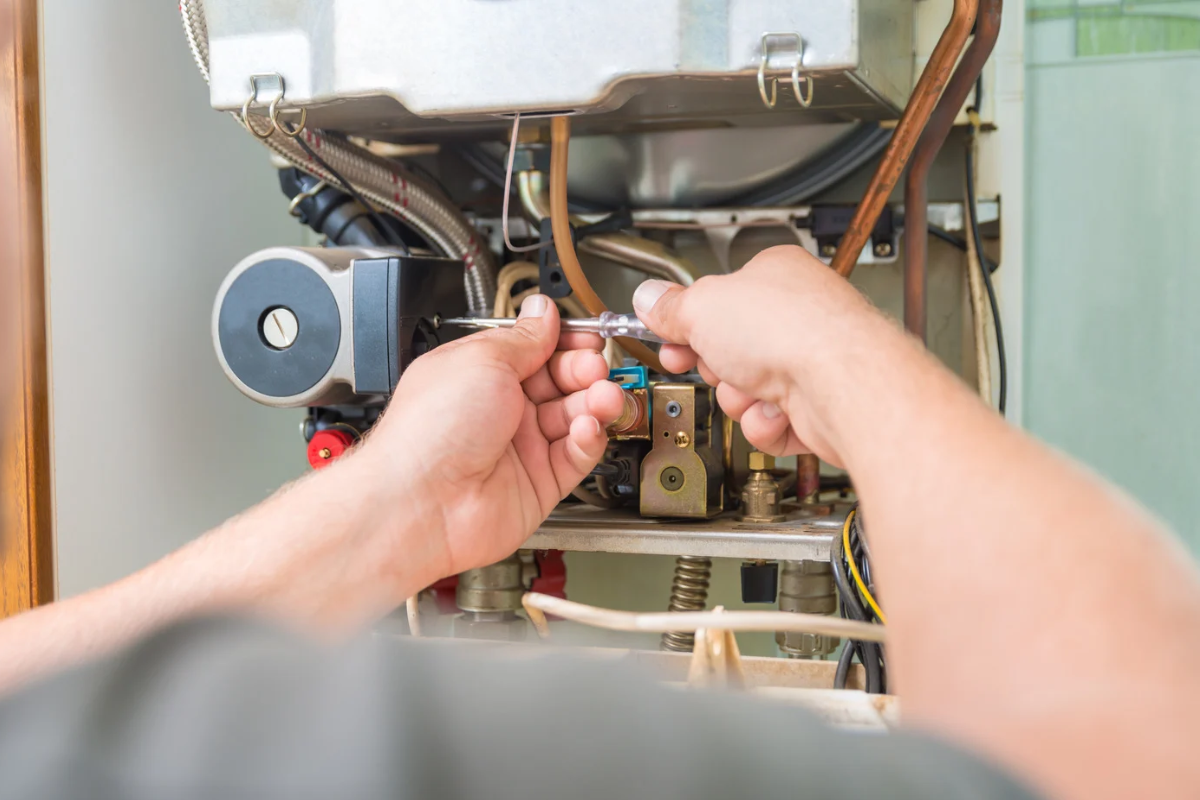
Your furnace has stopped heating, and the technician has given you a repair estimate. Now comes the harder question: is it worth fixing, or would that money be better spent on a new furnace?
The answer isn't always obvious. A $600 repair might be reasonable for a furnace that's been working reliably for years. The same repair could be less appealing if you've already paid for several service calls and the system still struggles to keep your home warm.
In general, furnace repair makes more sense when the problem is minor, the equipment is in good condition, and the repair cost is reasonable. Replacement becomes a stronger option when the furnace is older, breaks down frequently, has a serious safety problem, or needs an expensive repair.
For Monterey County homeowners, it's also worth considering how much heat the home actually needs. A house in Carmel Valley may have different heating demands than one near the coast, and a new furnace isn't necessarily the only replacement option.
At Carmel Valley Heating & Sheet Metal, we provide heating system repair, maintenance, and installation throughout Monterey County. Here's how to weigh the costs, warning signs, and long-term value before deciding what to do with your furnace.
Should You Repair or Replace Your Furnace?
Start with the condition of the furnace, the cost of fixing it, and how reliably it has worked.
Repair is usually worth considering when:
The furnace is less than 10 years old and otherwise in good condition.
The problem involves a relatively inexpensive, replaceable component.
You haven't needed repeated repairs.
The system heats your home comfortably when operating normally.
The repair is covered, at least in part, by a manufacturer's warranty.
Replacement may be the better investment when:
The furnace is 15 years old or older and needs a significant repair.
You've had multiple breakdowns over the past few heating seasons.
A major component has failed.
The furnace has a serious safety problem.
Heating performance has declined despite maintenance and repairs.
The system is poorly matched to your home's current heating needs.
These aren't absolute rules. A well-maintained 17-year-old furnace might only need a minor repair, while a much newer system could have a major defect that makes replacement worth evaluating.
The key is understanding whether the current repair is likely to provide worthwhile additional service.
Furnace Repair vs. Replacement: When Each Makes Sense
Not every furnace problem requires a new system. Compare these common situations to understand when a repair may be worthwhile and when replacement deserves consideration.
| Repair May Make Sense | Replacement May Make Sense |
|---|---|
| Relatively New Furnace The furnace is under 10 years old, generally reliable, and in good condition. The current problem appears isolated. | Aging Furnace The furnace is 15 to 20 years old or older and needs significant repairs. Other components may also be approaching the end of their service life. |
| Minor Component Failure The problem involves a serviceable component, such as an igniter, sensor, or control, and the repair cost is reasonable. | Major Component Failure An expensive blower assembly, heat exchanger, or other major component needs replacement, particularly on an older system. |
| Occasional Repairs The furnace has operated reliably for years and has not required repeated service visits. | Frequent Breakdowns Multiple repairs over recent heating seasons have increased costs and reduced confidence in the system. |
| Reasonable Repair Cost The repair costs substantially less than replacement and is likely to provide worthwhile additional service. | Expensive Repair Estimate The repair approaches half the cost of a comparable new furnace, particularly when the existing system is older or unreliable. |
| Remaining Warranty Coverage Manufacturer warranty coverage reduces the cost of replacing the failed component, making repair more economical. | Limited or No Warranty A major repair is fully out of pocket, and the cost is difficult to justify compared with replacing the aging furnace. |
| Reliable Heating Performance The furnace generally heats the home comfortably, and the current problem can be corrected without major system changes. | Declining Comfort or Efficiency The system struggles to heat the home reliably, and a professional evaluation shows that replacement would address the underlying problem. |
These are general guidelines, not automatic replacement rules. A qualified technician should evaluate the furnace's condition, safety, repair costs, and remaining service life. Serious safety defects must be corrected before the system is operated.
Carmel Valley Heating & Sheet Metal | Monterey County
How Long Does a Furnace Last?
Many residential furnaces last approximately 15 to 20 years, although some operate longer and others require replacement sooner.
Lifespan depends on several factors:
Installation quality and equipment sizing
How frequently the furnace operates
Routine maintenance
Airflow and ductwork conditions
The condition of burners, motors, and other components
The furnace's operating environment
According to ENERGY STAR, homeowners should consider replacing a furnace or boiler that is more than 15 years old, particularly when it needs frequent repairs or energy bills are increasing.
That doesn't mean 15 years is an expiration date.
Is It Worth Repairing a Furnace Under 10 Years Old?
Usually, yes, provided the equipment is otherwise in good condition.
A relatively new furnace may only need an igniter, sensor, control component, or another serviceable part.
Some repairs may also qualify for manufacturer warranty coverage.
Before considering replacement, have the problem diagnosed and ask whether the failure is isolated or related to a larger issue.
Should You Repair a 10- to 15-Year-Old Furnace?
This is often where the decision becomes less straightforward.
A furnace in this age range may have years of useful service remaining. If it has been dependable and the current repair is modest, keeping it may be the sensible choice.
But if the system has already needed several repairs, the latest estimate deserves more scrutiny.
Consider the repair history alongside the equipment's condition, not just its age.
Is a 15- or 20-Year-Old Furnace Worth Fixing?
Sometimes.
If a 16-year-old furnace needs a relatively inexpensive repair and has no other known problems, fixing it could still make sense.
If that same furnace needs an expensive blower assembly or heat exchanger replacement, you should compare the repair cost with a new system.
With older equipment, there's also a greater chance that another component will need attention in the coming years.
You don't necessarily need to replace the furnace immediately, but it's reasonable to start planning for the expense.
How Much Is Too Much to Spend on Furnace Repair?
There's no universal dollar amount at which replacement becomes the better choice.
A $1,000 repair on a relatively new furnace can be easier to justify than a $1,000 repair on an aging unit with several previous breakdowns.
Two common HVAC industry guidelines can help homeowners compare the numbers, although neither should be treated as a firm rule.
The 50% Furnace Repair Rule
The 50% rule suggests considering replacement when a repair costs half as much as installing a comparable new furnace.
For example, suppose you receive these estimates:
Furnace repair: $2,800
Furnace replacement: $6,000
The repair is approximately 47% of the replacement cost.
If the furnace is 18 years old and has been unreliable, replacement may be worth the additional investment.
If it's six years old, still under warranty, and otherwise in excellent condition, repairing it may make more sense.
The percentage is useful, but the furnace's remaining service life and reliability matter just as much.
What Is the $5,000 Rule for Furnace Replacement?
Another commonly mentioned guideline is to multiply the furnace's age by the estimated repair cost.
If the result exceeds $5,000, the rule suggests considering replacement.
For example, a 12-year-old furnace requiring a $600 repair produces a result of $7,200.
That doesn't mean replacing the furnace is automatically the best decision.
The $5,000 rule is a rough industry heuristic, not an official equipment standard or a proven financial cutoff. It doesn't account for warranty coverage, the cost of a new system, or the condition of the remaining components.
For an actual decision, compare written repair and replacement estimates rather than relying on either formula alone.
Look at What You've Already Spent on Repairs
One expensive repair isn't always the problem. Sometimes it's the pattern.
Suppose your furnace needed a $450 repair last winter, another $700 repair this year, and now requires an additional $1,200 in work.
That's $2,350 in repairs over a relatively short period.
Those costs don't automatically make replacement necessary, but they do raise an important question: is the furnace becoming less dependable?
Reviewing the repair history with your technician can help determine whether the problems are isolated or point to broader equipment wear.
When Furnace Repair Is Usually the Better Choice
There are plenty of situations where keeping your existing furnace is the right decision.
The Problem Is Minor and Repairable
Some furnace problems involve components that can be replaced without extensive work.
Examples include:
Igniters
Flame sensors
Thermostat controls
Certain switches and relays
Some electrical components
Serviceable blower components
The repair's complexity and cost vary by furnace model and the underlying cause.
A failed igniter, for instance, doesn't necessarily indicate that the rest of the heating system is wearing out.
The important thing is getting an accurate diagnosis rather than replacing equipment because it stopped working once.
The Furnace Has Been Reliable
If your furnace has provided consistent heat, hasn't needed frequent service, and remains in good condition, a single breakdown may not justify replacement.
A professional inspection can help determine whether the current problem is isolated.
The Repair Is Covered by Warranty
Check the manufacturer's warranty before approving a major repair.
Some furnace components may have limited parts warranties, while heat exchangers can carry separate coverage.
Terms vary by manufacturer, equipment model, installation date, and registration requirements.
Remember that parts coverage doesn't necessarily include labor or diagnostic charges.
Ask for the expected out-of-pocket cost after any applicable coverage is considered.
The Problem Isn't Actually the Furnace
Poor heating performance can sometimes come from thermostat settings, restricted airflow, or ductwork problems rather than a failing furnace.
For example, a clogged filter may restrict airflow enough to interfere with normal operation.
Similarly, leaky ductwork can leave rooms uncomfortable even when the furnace itself is producing heat.
If you're experiencing cold air from the vents, our guide to why a furnace blows cold air covers common causes and what homeowners can safely check.
Replacing the furnace won't necessarily solve a problem caused elsewhere in the system.
Seven Signs It May Be Time to Replace Your Furnace
A furnace doesn't have to stop working completely before replacement becomes worth considering.
These warning signs are especially important when several are happening together.
1. Your Furnace Needs Frequent Repairs
Calling for service every few years is different from needing multiple repairs each heating season.
Repeated failures can indicate worn components or unresolved operating problems.
If breakdowns are becoming more frequent, ask for an assessment of the furnace's overall condition rather than another isolated repair estimate.
2. A Major Component Has Failed
A failed heat exchanger, expensive blower motor, or other major component may change the economics of keeping an older furnace.
The part itself, labor requirements, equipment accessibility, and remaining warranty coverage all affect the repair cost.
A major failure doesn't always require replacement, but it's a good reason to compare your options.
3. Your Furnace Has a Serious Safety Issue
Safety should always come before cost.
A confirmed cracked or leaking heat exchanger can compromise the intended path for combustion gases, potentially creating a carbon monoxide hazard.
A qualified technician must determine whether the component can be replaced safely and economically or whether the entire furnace should be replaced.
The furnace should not be operated when a serious safety defect has been identified until the problem has been corrected.
If your carbon monoxide alarm sounds, leave the home immediately and call 911 from outside. If you smell gas, leave the area and contact your gas utility or emergency services from a safe location. Do not attempt to inspect or restart the equipment yourself.
The CDC recommends annual professional service for fuel-burning heating systems to help reduce carbon monoxide hazards.
4. Some Rooms Never Get Warm Enough
Uneven heating can be frustrating, especially when the furnace seems to run constantly.
But it isn't always a furnace replacement problem.
Restricted airflow, leaking ducts, insulation deficiencies, and incorrect system sizing can all contribute to uncomfortable rooms.
A technician should identify the actual cause before recommending new equipment.
5. Your Furnace Short Cycles or Runs Excessively
Short cycling occurs when a furnace repeatedly starts and stops without completing normal heating cycles.
Potential causes include airflow restrictions, control problems, overheating, or sizing issues.
Likewise, a furnace that runs for unusually long periods without reaching the thermostat setting may have a mechanical problem or be struggling with the home's heating demand.
Both symptoms deserve professional diagnosis.
If an older furnace has persistent problems despite appropriate repairs, replacement may be worth considering.
6. Heating Costs Have Increased Without an Obvious Explanation
An aging furnace may become less efficient because of maintenance issues or deteriorating components.
However, a higher gas or electric bill doesn't prove that the furnace needs replacement.
Weather, utility rates, thermostat settings, and household energy use also affect costs.
Compare your bills with similar periods, accounting for changes in rates and usage, before assuming the equipment is responsible.
7. The Furnace No Longer Fits Your Home's Needs
Home renovations, additions, or changes to the property's heating and cooling needs can make an existing system less suitable.
For example, a furnace sized for the original home may not properly serve a new addition.
In other cases, an oversized system may cycle frequently and create comfort problems.
If you're making significant changes to the home, it may be a good time to reassess the entire heating system.
Will Replacing an Old Furnace Save Money on Energy Bills?
A newer, more efficient furnace can reduce fuel consumption, but the savings depend on the equipment and the amount of heating your home requires.
Gas furnace efficiency is measured using Annual Fuel Utilization Efficiency, or AFUE.
An 80% AFUE furnace converts approximately 80% of the fuel's energy into useful heat under the standard seasonal rating method.
A 95% AFUE furnace converts approximately 95%.
For a home with the same heating demand, the more efficient furnace generally uses less fuel.
However, that doesn't mean every homeowner will see a dramatic reduction in their total utility bill.
Fuel prices, weather, insulation, duct leakage, thermostat settings, and installation quality all influence actual savings.
In Monterey County, heating demand can vary considerably by location and property.
A coastal home that needs occasional heating during cool evenings may have less opportunity to recover the cost of a high-efficiency upgrade through fuel savings than a home with greater heating demand.
It's worth asking for an estimate of annual operating costs, particularly when comparing equipment with different efficiency ratings.
You can learn more about furnace efficiency through the U.S. Department of Energy's residential furnace guidance.
Should You Replace Your Furnace With a Heat Pump?
If you're already paying for a new heating system, don't overlook the possibility of switching to a heat pump.
A heat pump provides heating and cooling by transferring heat rather than generating it through combustion.
Modern heat pumps can be well suited to Monterey County's generally moderate climate, although proper sizing and installation remain essential.
A heat pump may be worth considering if:
You want heating and air conditioning from one system.
Your furnace and air conditioner are both aging.
You're interested in an electric heating system.
You're remodeling or upgrading your HVAC system.
You want to compare long-term energy costs before purchasing new equipment.
If your home already has suitable ductwork, a ducted heat pump may be an option. For homes without ducts, a ductless mini-split may be worth exploring.
There are also situations where replacing an existing furnace with another furnace may be a practical choice.
The right answer depends on the house, existing equipment, installation requirements, and energy costs.
Carmel Valley Heating & Sheet Metal offers both heating and furnace installation and heat pump and mini-split services throughout Monterey County.
What About California's 2026 Energy Code?
California's 2025 Building Energy Efficiency Standards took effect January 1, 2026.
These requirements affect qualifying new construction, additions, and alterations, including certain heating and cooling projects.
The updated standards place greater emphasis on heat pumps and energy-efficient system design. They do not, however, mean every California homeowner is prohibited from replacing an existing gas furnace.
Requirements depend on the project and the applicable compliance pathway.
If you're replacing equipment, ask your contractor what permits, inspections, and energy code requirements apply to your installation.
The California Energy Commission provides official information about the current standards.
How Much Does Furnace Replacement Cost in Monterey County?
Furnace replacement costs depend on the equipment selected and how much work is required at the property.
A straightforward replacement using compatible existing ductwork and connections may cost less than an installation requiring substantial changes.
Factors that affect pricing include:
Furnace capacity, efficiency, and features
Equipment brand and model
Installation location and accessibility
Existing ductwork condition
Venting and gas connections
Electrical or thermostat changes
Permit and inspection requirements
Removal and disposal of old equipment
Additional work needed to meet current building requirements
A furnace located in an accessible garage may present different installation conditions from equipment installed in a cramped attic or crawlspace.
For an accurate comparison, request an estimate based on the home's actual heating requirements.
If replacement is necessary but the upfront expense is a concern, HVAC financing through GreenSky may be available for qualifying projects, subject to approval and financing terms.
Ask about any currently available utility incentives or equipment rebates before finalizing your selection. Eligibility and program availability can change.
What Should Monterey County Homeowners Consider?
A furnace replacement should fit the home, not simply duplicate the equipment that's already there.
In Carmel Valley, cooler inland nights may create different heating demands than those experienced in Monterey, Pacific Grove, or Carmel-by-the-Sea.
Older homes may also have ductwork that was modified over time, insulation gaps, or equipment that wasn't properly sized when it was originally installed.
If the furnace is failing, this is an opportunity to ask whether the existing setup has been serving the property well.
For example, if one bedroom has always been cold, a larger furnace may not solve the problem. The issue could be restricted ductwork, air leakage, or inadequate insulation.
Similarly, a home that has been remodeled may need a different heating capacity than it did when the original furnace was installed.
A proper replacement evaluation should include the home's heating requirements, airflow, existing ductwork, equipment location, and comfort concerns.
This helps avoid spending money on a new furnace only to experience the same problems afterward.
What Can You Check Before Calling for Furnace Repair?
If the furnace isn't heating, a few simple checks may help identify an obvious problem.
Thermostat: Make sure it is set to heat and the desired temperature is above the current room temperature.
Air filter: Check whether the filter is dirty or clogged, and replace it if needed using the correct type and size.
Vents: Make sure supply and return vents aren't blocked by furniture or other items.
Power: Check whether the thermostat and furnace appear to have power. Don't repeatedly reset a tripped breaker.
Error messages: If the thermostat displays an error, write it down for the technician.
Avoid opening gas components, bypassing safety switches, or attempting electrical repairs.
If you notice a burning smell that persists, unusual banging, repeated shutdowns, or other concerning symptoms, arrange professional service.
And if you suspect gas leakage or carbon monoxide exposure, follow the emergency safety guidance above rather than attempting troubleshooting.
Questions to Ask Before Approving a Furnace Repair or Replacement
If the repair estimate is substantial, you should understand exactly what you're paying for.
Ask your technician:
What failed, and how was the problem diagnosed? A clear explanation should identify the failed component or operating issue.
Is the rest of the furnace in good condition? Find out whether there are signs of other significant problems.
Is the repair covered by warranty? Ask about parts and labor separately.
How much would a comparable replacement cost? Compare complete installed prices rather than equipment costs alone.
Would a new furnace solve any existing comfort problems? If ductwork or airflow is the issue, ask how that will be addressed.
Would a heat pump be a practical alternative? This is especially worth discussing if you're also considering air conditioning.
For an expensive repair or a recommendation to replace a relatively young furnace, a second professional opinion can be useful.
Frequently Asked Questions About Furnace Repair vs. Replacement
Is it worth repairing a 15-year-old furnace?
It can be, especially if the repair is inexpensive and the furnace has been dependable. However, a 15-year-old furnace that needs major work or frequent repairs is a stronger candidate for replacement. Compare the repair cost, overall condition, and available warranty coverage before deciding.
Should I repair or replace a 20-year-old furnace?
At 20 years old, a furnace is generally at an age where replacement deserves serious consideration. A minor repair may still be practical, but investing heavily in major components can be difficult to justify when other parts may also be aging.
What is the 50% rule for furnace replacement?
The 50% rule suggests considering replacement when the repair costs approximately half or more of a comparable new furnace installation. It's a budgeting guideline, not a requirement. The furnace's age, reliability, and overall condition also matter.
What is the $5,000 rule for HVAC replacement?
The $5,000 rule multiplies the furnace's age by its estimated repair cost. A result above $5,000 suggests evaluating replacement. This is only a rough rule of thumb and doesn't account for warranties, actual replacement costs, or the condition of the system.
Is replacing a furnace cheaper than continuing to repair it?
Sometimes. Replacement costs more upfront, but it may provide better long-term value when an aging furnace needs repeated or expensive repairs. A relatively new furnace with a single repairable problem is usually less expensive to keep.
Can a furnace last 25 or 30 years?
Some furnaces remain operational for 25 years or longer, but that's beyond the typical service life of many modern systems. Continued operation doesn't guarantee reliability, efficiency, or safety. An older furnace should be professionally evaluated and maintained, with replacement planned when its condition warrants it.
Should I replace my furnace if it has a cracked heat exchanger?
A confirmed cracked or leaking heat exchanger is a serious safety issue. The furnace should not be operated until a qualified professional has evaluated and corrected the problem. Depending on the system's condition, warranty coverage, and repair cost, replacing the heat exchanger or the entire furnace may be appropriate.
Should I replace my furnace and air conditioner at the same time?
Not always. However, if both systems are aging, a coordinated replacement may be worth considering for equipment compatibility, installation planning, and overall costs. A heat pump may also be an alternative that provides both heating and cooling.
How often should a furnace be serviced?
Gas furnaces should generally receive professional maintenance annually, ideally before the heating season. Regular service can help identify safety concerns, airflow restrictions, and developing component problems. See our guide to how often an HVAC system should be serviced.
Furnace Repair or Replacement in Monterey County
An older furnace doesn't always need to be replaced, and a single expensive repair doesn't automatically mean the system has reached the end of its life.
The right decision comes down to the furnace's condition, repair history, safety, and the cost of keeping it operating compared with installing a replacement.
If the equipment is reliable and the problem is minor, repair may be the most practical choice. If breakdowns are becoming frequent or a major component has failed, comparing replacement options can help prevent further spending on an unreliable system.
Carmel Valley Heating & Sheet Metal provides HVAC repair and maintenance, furnace installation, and heating system replacement throughout Carmel Valley, Monterey, Carmel-by-the-Sea, Pebble Beach, Pacific Grove, Marina, Big Sur, and surrounding Monterey County communities.
With more than 20 years of experience, our locally owned team can inspect your heating system, explain the problem, and help you compare repair and replacement options.
Not sure whether your furnace is worth repairing? Contact Carmel Valley Heating & Sheet Metal or call (831) 298-9922 to schedule service or request a free replacement estimate.