
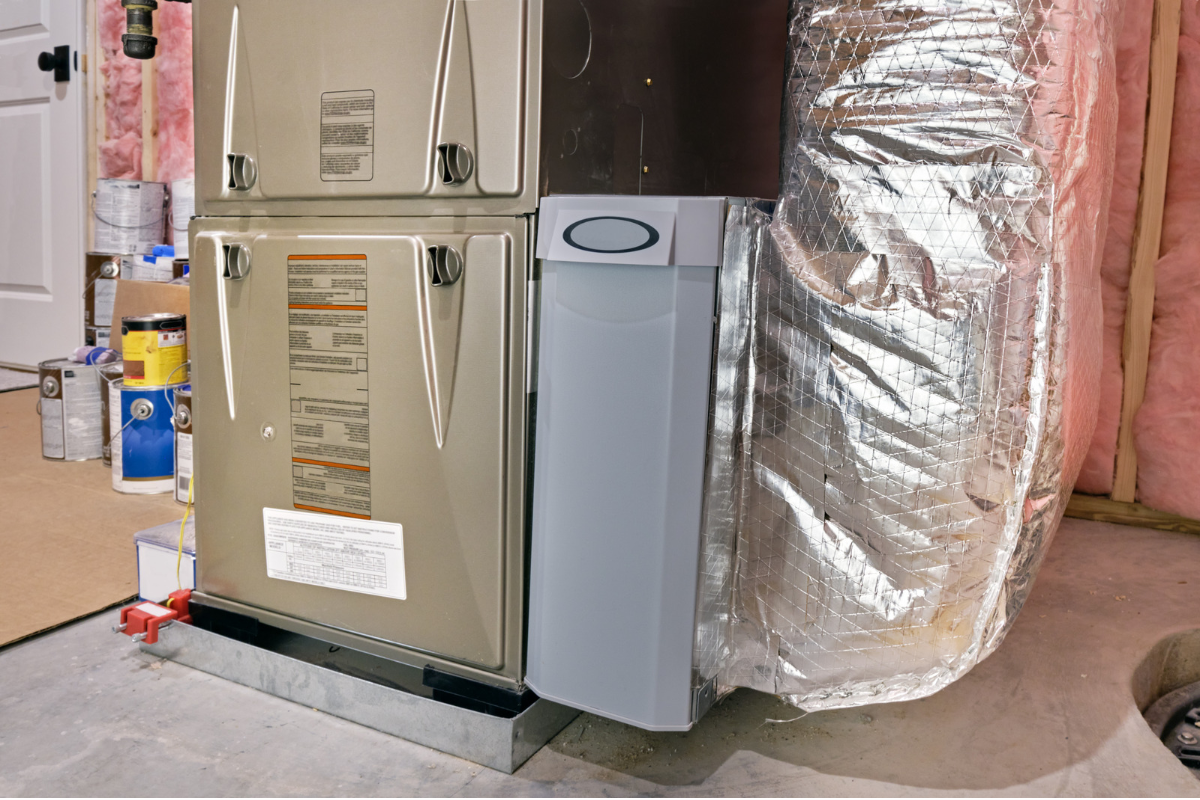
Replacing a furnace in Monterey County typically requires a budget of approximately $5,000 to $12,000 for many residential gas furnace projects. A straightforward replacement may cost less, while high-efficiency equipment, difficult access, or necessary ductwork and venting modifications can push the total higher.
These are preliminary planning figures based on published California and Central Coast pricing, not confirmed Monterey County averages or guaranteed contractor prices.
For homeowners in Carmel Valley, Monterey, Pebble Beach, and surrounding communities, the final cost depends on more than the furnace itself. The home's heating requirements, existing ductwork, equipment location, and California installation requirements all play a role.
At Carmel Valley Heating & Sheet Metal, we provide heating and furnace installation, repair, and maintenance throughout Monterey County.
Here's what to know before investing in a new furnace.
What Is the Average Furnace Replacement Cost in Monterey County?
For budgeting purposes, many residential gas furnace replacements may fall between $5,000 and $12,000 installed, although projects can cost less or considerably more.
According to Modernize's California furnace cost guide, furnace replacement in California generally ranges from $4,500 to $9,000, including installation.
Separate Central Coast pricing estimates suggest that some replacement projects can reach $12,000 or more, depending on equipment and installation requirements.
Neither source establishes an exact average for Monterey County. However, the figures provide a useful starting point when planning a replacement.
The biggest price differences often come down to the amount of work involved.
Consider two examples:
A straightforward replacement: A homeowner replaces an existing gas furnace in an accessible garage. The ductwork, gas supply, electrical connections, and venting are suitable for the new equipment. This generally requires less installation work.
A more complicated replacement: A homeowner needs to replace an older attic furnace, upgrade the venting, and correct significant airflow problems. Additional labor, materials, and compliance requirements can increase the total cost.
Both homeowners are purchasing a new furnace, but the work required to install each system is substantially different.
That's why a written estimate based on the actual property is more useful than a generic online price.
Furnace Replacement Costs by Project Type
Not every furnace installation requires the same amount of work. The following comparison illustrates the differences between common replacement scenarios.
Furnace Replacement Costs by Project Type
Many residential gas furnace replacements in Monterey County may cost approximately $5,000 to $12,000 installed. The final price depends on the equipment and installation requirements. Here's how different projects compare.
| Project Type | What Affects the Installation Cost |
|---|---|
| Straightforward Gas Furnace Replacement | Replacing an existing furnace with a compatible model in an accessible location. Suitable ductwork, venting, and connections may reduce additional labor and materials. These projects may fall toward the lower end of the overall budget. |
| High-Efficiency Furnace Upgrade | Higher-efficiency equipment may have a greater upfront cost. New venting, condensate drainage, or other system modifications can also increase installation expenses. |
| Attic or Difficult-Access Replacement | Confined spaces, narrow access openings, and difficult equipment removal may increase labor costs. Additional installation planning or connection modifications may be necessary. |
| Replacement With Ductwork Repairs | Leaking, damaged, or restrictive ductwork may need repairs or adjustments. Costs depend on the condition of the existing ducts and the amount of work required to support proper airflow. |
| Complex Furnace Replacement | Major duct modifications, furnace relocation, significant venting changes, or extensive installation upgrades may increase costs beyond the preliminary budget range. |
The $5,000 to $12,000 range is a preliminary budgeting estimate based on broader California and Central Coast pricing, not a verified Monterey County average or guaranteed installation price. Actual costs may fall outside this range. A property-specific estimate is necessary.
Carmel Valley Heating & Sheet Metal | Monterey County
The overall $5,000 to $12,000 budgeting range is useful for planning, but project categories should not be treated as fixed price brackets. Equipment selection and installation conditions ultimately determine the cost.
A high-efficiency furnace, for example, may require new exhaust venting or condensate drainage that was not needed for the previous system. An older home may also need duct modifications before the replacement can perform properly.
If you're considering a furnace replacement, Carmel Valley Heating & Sheet Metal can assess the existing system and explain which installation requirements apply to your home.
What Is Included in the Cost of Replacing a Furnace?
A complete furnace replacement involves more than purchasing new heating equipment.
The scope of work generally includes the furnace itself, removal of the old unit, installation labor, connections, and startup testing. Depending on the home, additional work may be necessary.
New Furnace Equipment
The furnace is one of the largest expenses in the project.
Equipment prices vary based on heating capacity, efficiency, manufacturer, operating features, and controls.
Common options include:
Single-stage furnaces: Generally operate at one heating output and often have a lower initial equipment cost.
Two-stage furnaces: Can operate at different heating outputs, potentially improving temperature consistency and comfort.
Modulating furnaces: Adjust heating output through a broader range, depending on the model, and typically cost more than basic equipment.
More advanced equipment can provide additional comfort and operating features, but not every home needs a premium furnace.
For many homeowners, selecting a properly sized, reliable system matters more than purchasing the most expensive model.
Removal and Installation Labor
The existing furnace must be disconnected, removed, and appropriately disposed of.
Installation then involves positioning the new equipment, connecting the necessary systems, and checking its operation.
Labor requirements depend heavily on accessibility.
A garage furnace with adequate working space may be relatively simple to replace. An attic furnace accessed through a narrow opening can require considerably more effort.
Venting and Gas Connections
Gas furnaces must have suitable fuel connections, combustion air, and exhaust venting.
If the new equipment has different requirements from the original furnace, modifications may be necessary.
This is particularly important when replacing an older standard-efficiency furnace with a high-efficiency condensing model.
Ductwork and Airflow Adjustments
Installing a new furnace does not automatically resolve problems with the existing ductwork.
Damaged ducts, air leaks, restricted airflow, or inadequate return connections can affect how well the replacement system performs.
Some homes need only minor adjustments. Others may require duct repairs or more extensive modifications.
A qualified contractor should evaluate the duct system before recommending major changes.
If your home has ongoing airflow problems, our guide to when to replace your home's ductwork explains the signs that repairs or replacement may be necessary.
Permits and Inspections
Furnace replacements in California generally require applicable building permits and inspections.
Depending on the project, duct leakage testing, energy compliance documentation, and third-party verification may also be required.
Ask whether these services and related fees are included in your installation estimate.
An estimate that excludes required work may appear less expensive without reflecting the full project cost.
What Factors Affect Furnace Replacement Cost?
Several factors can change the amount you pay for a new furnace.
1. Furnace Size and Heating Capacity
Furnace capacity is typically measured in British thermal units per hour (BTU/h).
A larger home may require more heating capacity, but square footage alone does not determine the correct furnace size.
A home's insulation, windows, air leakage, ceiling height, layout, and local climate all influence its heating requirements.
An oversized furnace can contribute to short cycling and uneven comfort. An undersized system may struggle to maintain the desired temperature.
A heating load calculation, such as one performed using ACCA Manual J, can help determine appropriate equipment capacity.
The replacement should be selected based on the home's needs rather than automatically matching the old furnace's size.
2. Furnace Efficiency
Gas furnace efficiency is measured using Annual Fuel Utilization Efficiency (AFUE).
An 80% AFUE furnace converts approximately 80% of the fuel's energy into useful heat under standardized seasonal conditions. A 95% AFUE model converts approximately 95%.
A higher-efficiency furnace generally uses less fuel to deliver the same amount of heat, but it may cost more to purchase or install.
Whether the upgrade is worthwhile depends on:
How often the home requires heating
Local natural gas prices
The cost difference between furnace models
Whether venting or drainage modifications are needed
How long the homeowner expects to use the system
The most efficient furnace is not necessarily the most economical choice for every property.
3. Furnace Location and Accessibility
Equipment installed in an accessible garage or mechanical room may be easier to replace than a furnace located in an attic, crawlspace, or confined closet.
Difficult access can increase labor costs, especially when removing the old equipment or modifying connections.
For homes with unusual layouts or limited mechanical space, installation planning is an important part of preparing an accurate estimate.
4. Existing Ductwork
If the existing duct system is in good condition and compatible with the new furnace, much of it may be reused.
However, leaking ducts, inadequate return airflow, or damaged connections may require attention before installation is complete.
Not every duct issue requires full replacement. Targeted repairs, sealing, or modifications may be sufficient.
5. Electrical, Gas, and Venting Modifications
A replacement furnace must be compatible with the home's supporting systems.
Depending on the equipment, the installation may require changes to gas connections, electrical wiring, thermostat controls, venting, or condensate drainage.
These requirements can increase the total project cost even when the furnace itself is reasonably priced.
6. Permits and Code Compliance
Applicable building and energy standards can affect the scope of the work.
The costs associated with permits, inspections, testing, and necessary corrections should be considered when comparing estimates.
A lower initial quote does not necessarily mean a lower final installation cost.
How Does Furnace Replacement Differ Across Monterey County?
Monterey County includes coastal communities, inland valleys, older residential neighborhoods, and custom properties with very different heating needs.
Those differences matter when choosing and installing a furnace.
Carmel Valley and Inland Homes
Carmel Valley generally experiences greater differences between daytime and nighttime temperatures than locations closer to Monterey Bay.
Cool winter nights can make dependable heating particularly important for inland homeowners.
Older homes, larger properties, and houses with substantial air leakage may also have different heating requirements from newer, well-insulated buildings.
Proper equipment sizing helps account for these conditions without installing more capacity than necessary.
Monterey, Pacific Grove, and Carmel-by-the-Sea
Coastal communities often experience moderate temperatures, but cool evenings, fog, and winter weather still create a need for reliable heating.
Some homeowners may use their furnaces less frequently than those in inland locations.
That can influence whether a more expensive high-efficiency furnace offers enough long-term fuel savings to justify its additional cost.
The decision should be based on actual heating demand rather than assuming every Monterey County home needs the same equipment.
Pebble Beach, Big Sur, and Custom Homes
Some properties in Pebble Beach, Big Sur, and surrounding areas have unique architectural layouts, difficult equipment access, or complicated mechanical systems.
Older ductwork, confined installation spaces, and hillside access can make furnace replacement more involved.
These conditions do not automatically mean a higher price, but they reinforce the importance of evaluating the property before quoting the work.
Is a High-Efficiency Furnace Worth the Extra Cost?
A high-efficiency furnace can reduce natural gas consumption, but the financial benefit varies from home to home.
For example, when comparing an 80% AFUE furnace with a 95% AFUE model, the higher-efficiency furnace theoretically uses about 16% less fuel to deliver the same amount of useful heat.
That does not mean your total household energy bill will decrease by 16%.
Actual savings depend on the amount of heating required, utility rates, installation quality, and other factors.
For a homeowner in Carmel Valley who uses the heating system regularly during colder months, improved efficiency may provide meaningful long-term benefits.
For a coastal property with relatively limited annual heating demand, the savings may be smaller.
A high-efficiency upgrade can also require venting or condensate drainage modifications.
Before deciding, compare the full installed cost of each option with its expected operating expenses and comfort benefits.
Should You Repair or Replace Your Furnace?
Not every furnace problem means you need a new heating system.
If your furnace is relatively new, has been reliable, and needs a manageable repair, keeping the existing equipment may be the better financial choice.
Replacement becomes more attractive when the system is aging, repairs are becoming frequent, or significant components are deteriorating.
Many residential furnaces operate for approximately 15 to 20 years, although actual service life varies.
Signs that replacement may be worth considering include:
Frequent breakdowns or repeated service calls
Increasingly expensive repairs
Difficulty maintaining comfortable indoor temperatures
Significant deterioration of major components
A serious safety defect that cannot be economically corrected
An older system that no longer meets the home's needs
A confirmed unsafe combustion condition or damaged heat exchanger requires professional evaluation before the equipment is operated again.
If a furnace is more than 15 years old and needs an expensive repair, comparing the repair estimate with the cost of replacement can help determine which investment makes more sense.
However, age alone is not a reason to replace equipment that is still operating safely and reliably.
For a closer comparison, see our guide to furnace repair vs. replacement, including common warning signs, repair costs, and when replacing an aging system may offer better long-term value.
If the problem is repairable, our team also provides HVAC repair and maintenance throughout Monterey County.
Should You Replace a Gas Furnace With a Heat Pump?
When an older gas furnace needs replacement, some Monterey County homeowners may benefit from comparing it with a heat pump.
A gas furnace generates heat by burning fuel. An electric heat pump transfers heat, allowing many systems to provide both heating and air conditioning.
A heat pump may be particularly appealing if you also want to add cooling or replace an aging air conditioner.
However, switching systems can involve additional equipment, electrical work, and installation considerations.
Gas Furnace vs. Heat Pump: What Homeowners Should Know
Both systems can provide reliable heating, but they differ in installation requirements, operating costs, and cooling capabilities. Compare these factors before replacing your existing furnace.
| Consideration | Gas Furnace | Electric Heat Pump |
|---|---|---|
| Heating | Produces heat by burning natural gas and distributes warm air through ducts. | Transfers heat from outdoor air into the home using electricity. |
| Cooling | Requires separate air conditioning equipment for cooling. | Many models provide both heating and air conditioning. |
| Energy Source | Natural gas, with electricity needed for controls and airflow. | Electricity for heating, cooling, and system operation. |
| Installation Cost | May have a lower upfront cost when existing gas connections, venting, and ductwork are suitable. | May require additional electrical, refrigerant, or equipment work, increasing upfront costs. |
| Existing Ductwork | Existing ducts may be reused if properly sized and in suitable condition. | Ducted models may use existing ducts if airflow and system compatibility requirements are met. |
| Operating Costs | Depend on natural gas prices, furnace efficiency, and heating demand. | Depend on electricity rates, heat pump efficiency, climate, and heating and cooling demand. |
| Rebates & Incentives | Traditional gas furnace replacements may have fewer available incentives. | Qualifying heat pump installations may be eligible for utility or electrification rebates, depending on current program funding. |
| Best Fit | May be practical when replacing an existing gas furnace with compatible infrastructure. | Worth considering when upgrading both heating and cooling or switching to electric equipment. |
Installation and operating costs depend on the property, equipment, utility rates, and required modifications. Neither system is automatically the least expensive option. Compare complete installed costs and expected operating expenses before deciding.
Carmel Valley Heating & Sheet Metal | Monterey County
A furnace-only replacement may have a lower upfront cost when existing connections and ductwork can be reused.
A heat pump may provide greater overall value when heating and cooling upgrades are both needed.
The right option depends on the home, the owner's priorities, and the complete installed cost.
Carmel Valley Heating & Sheet Metal provides both furnace installation and replacement and heat pump and mini-split services, allowing homeowners to explore different heating options.
Do You Need a Permit to Replace a Furnace in Monterey County?
Yes, furnace replacement generally requires applicable permits and inspections in Monterey County.
The responsible building department depends on where the property is located.
Homes in unincorporated Carmel Valley generally fall under Monterey County jurisdiction. Properties within incorporated cities, such as Monterey, Carmel-by-the-Sea, Pacific Grove, or Marina, follow their respective local permitting procedures.
California's 2025 Building Energy Efficiency Standards took effect for qualifying permit applications submitted on or after January 1, 2026.
These standards include requirements for applicable HVAC alterations and replacements.
Depending on the project, compliance may involve equipment efficiency requirements, duct sealing, testing, or verification.
The updated Energy Code encourages greater use of heat pumps, but it does not create a blanket statewide ban on replacing every existing gas furnace.
You can review the California Energy Commission's 2025 Building Energy Efficiency Standards for additional information.
Before approving an installation, confirm that the contractor has accounted for the applicable permit, inspection, and compliance requirements.
Are Furnace Replacement Rebates Available in 2026?
Available incentives depend on the type of heating system being installed.
Homeowners should distinguish between replacing a gas furnace with another gas furnace and converting to a qualifying electric heat pump.
Federal Energy Tax Credits
The federal Energy Efficient Home Improvement Credit under Section 25C is no longer available for qualifying equipment placed in service after December 31, 2025.
As a result, homeowners installing a new furnace in 2026 should not assume the former federal credit applies.
The IRS provides information about the credit's expiration.
Central Coast Community Energy Incentives
Central Coast Community Energy (3CE) offers its Electrify Your Home program for eligible electric equipment upgrades.
Qualifying homeowners replacing certain fossil-fuel heating systems with eligible heat pumps may qualify for rebates.
Program terms changed effective October 1, 2026, and availability depends on eligibility and funding.
These incentives are generally intended for qualifying electrification projects, not standard gas-to-gas furnace replacements.
Review the current 3CE Electrify Your Home program before making a purchasing decision.
TECH Clean California Rebates
California also has heat pump incentive programs administered through TECH Clean California.
However, the program reports that its single-family HEEHRA rebates are fully reserved statewide as of February 24, 2026, and new reservations are not currently being accepted.
Other incentive categories may have different availability.
Always confirm program funding, equipment eligibility, and application requirements before counting a rebate toward the cost of replacement.
Is Financing Available for Furnace Replacement?
Replacing a furnace is not always a planned expense.
If your heating system fails unexpectedly or an older unit requires a major repair, financing may help make the installation cost more manageable.
Carmel Valley Heating & Sheet Metal offers HVAC financing through GreenSky for qualifying projects.
Eligible homeowners may be able to spread the cost of a new furnace or heating system over time, depending on credit approval and the available financing terms.
Before choosing financing, review the interest rate, repayment period, monthly payment, applicable fees, and total borrowing cost.
Financing does not necessarily reduce the overall price, but it may provide additional flexibility when planning a necessary replacement.
Contact our team to ask about financing options for qualifying furnace installations.
How Can You Avoid Unnecessary Furnace Replacement Costs?
The lowest quote is not always the most economical long-term choice.
A properly selected furnace, installed correctly and suited to the home's heating requirements, can help avoid unnecessary equipment expenses and performance problems.
Before committing to replacement:
Confirm the diagnosis. A repairable component failure does not always justify replacing the entire furnace.
Request proper equipment sizing. Avoid purchasing more heating capacity than the home needs.
Check the ductwork. Existing ducts may be reusable, and localized problems may not require complete replacement.
Compare furnace features. Advanced controls may improve comfort, but simpler equipment may be appropriate for some homes.
Review the entire estimate. Confirm what is included for labor, removal, permits, testing, venting, and any necessary modifications.
Plan ahead when possible. Evaluating an aging furnace before it fails gives you more time to compare options and prepare for installation.
Regular maintenance can also help identify developing issues before they become major problems. Our guide to preparing your HVAC system for winter in Monterey County covers practical steps homeowners can take before the heating season.
It's also worth asking whether the proposed equipment includes features that will provide a noticeable benefit in your particular home.
The goal is to make an informed investment, not simply purchase the least expensive furnace available.
What Should You Ask Before Hiring a Furnace Replacement Contractor?
A detailed written estimate helps you understand what you're paying for and why the recommended work is necessary.
Before selecting a contractor, ask:
What furnace size and efficiency rating do you recommend?
How was the heating capacity determined?
Will my existing ductwork and venting be suitable?
Does the estimate include removing and disposing of the old furnace?
Are applicable permits, inspections, and testing included?
What additional work could affect the quoted price?
What manufacturer and installation warranties are provided?
Will the system be tested after installation?
Would a heat pump be a practical alternative for my home?
A reliable contractor should be able to explain the recommendation and identify which expenses are necessary for a safe, properly functioning installation.
How Long Does Furnace Replacement Take?
A straightforward residential furnace replacement can sometimes be completed within one working day.
However, installation timelines vary depending on the equipment and property.
Projects involving difficult access, duct modifications, new venting, electrical work, or equipment relocation may take longer.
Permits, inspections, and required verification can also affect scheduling.
Ask your contractor about the expected installation timeline and how long the home's heating system will be unavailable.
Frequently Asked Questions About Furnace Replacement Cost
How much does it cost to replace a gas furnace in Monterey County?
Many residential gas furnace replacement projects may fall within a preliminary budget of $5,000 to $12,000, based on broader California and Central Coast estimates. Complex installations can exceed that range. A property-specific estimate is necessary to determine the actual cost.
How much does a new furnace cost with installation?
The installed price includes the heating equipment and labor, along with applicable materials and connections. Removal, disposal, permits, inspections, and necessary modifications should also be accounted for, although contractors may structure their estimates differently.
Is it more expensive to replace a furnace in an attic?
It can be. Attic replacements may require additional labor because of restricted access, difficult equipment removal, or limited working space. The total cost depends on the specific installation.
Does a larger home need a more expensive furnace?
Not necessarily. Larger homes may need greater heating capacity, but insulation, windows, air leakage, layout, and climate also affect furnace sizing. Square footage alone is not enough to determine the appropriate equipment.
How long does a new furnace last?
Many residential furnaces last approximately 15 to 20 years. Service life depends on equipment quality, proper installation, maintenance, operating conditions, and usage.
Can a new furnace lower my heating bill?
Possibly. A higher-efficiency furnace may use less fuel than an older, less efficient system. However, actual savings depend on heating demand, utility rates, ductwork, installation quality, and other conditions.
Is it cheaper to replace a furnace or install a heat pump?
A compatible gas furnace replacement may have a lower upfront cost than converting to a heat pump. However, a heat pump provides both heating and cooling in many configurations and may qualify for incentives. Comparing complete installation and operating costs is the best way to evaluate the options.
Can I finance furnace replacement in Monterey County?
Yes. Carmel Valley Heating & Sheet Metal offers financing through GreenSky for qualifying HVAC installations and replacements, subject to approval and applicable terms.
Get a Furnace Replacement Estimate in Monterey County
A new furnace is an investment in your home's comfort and reliability. Understanding the installation requirements before choosing equipment can help you avoid unnecessary expenses and make a more informed decision.
Carmel Valley Heating & Sheet Metal provides furnace installation and replacement, HVAC repair, and maintenance throughout Carmel Valley, Monterey, Carmel-by-the-Sea, Pebble Beach, Pacific Grove, Marina, Seaside, Big Sur, and surrounding Monterey County communities.
With more than 20 years of experience, our locally owned team can assess your existing heating system, explain available replacement options, and provide recommendations based on your home's needs.
Considering a new furnace? Contact Carmel Valley Heating & Sheet Metal or call (831) 298-9922 to request a free furnace replacement estimate.