
Heat Pump vs. Mini-Split: Which Is Better for Monterey County Homes?
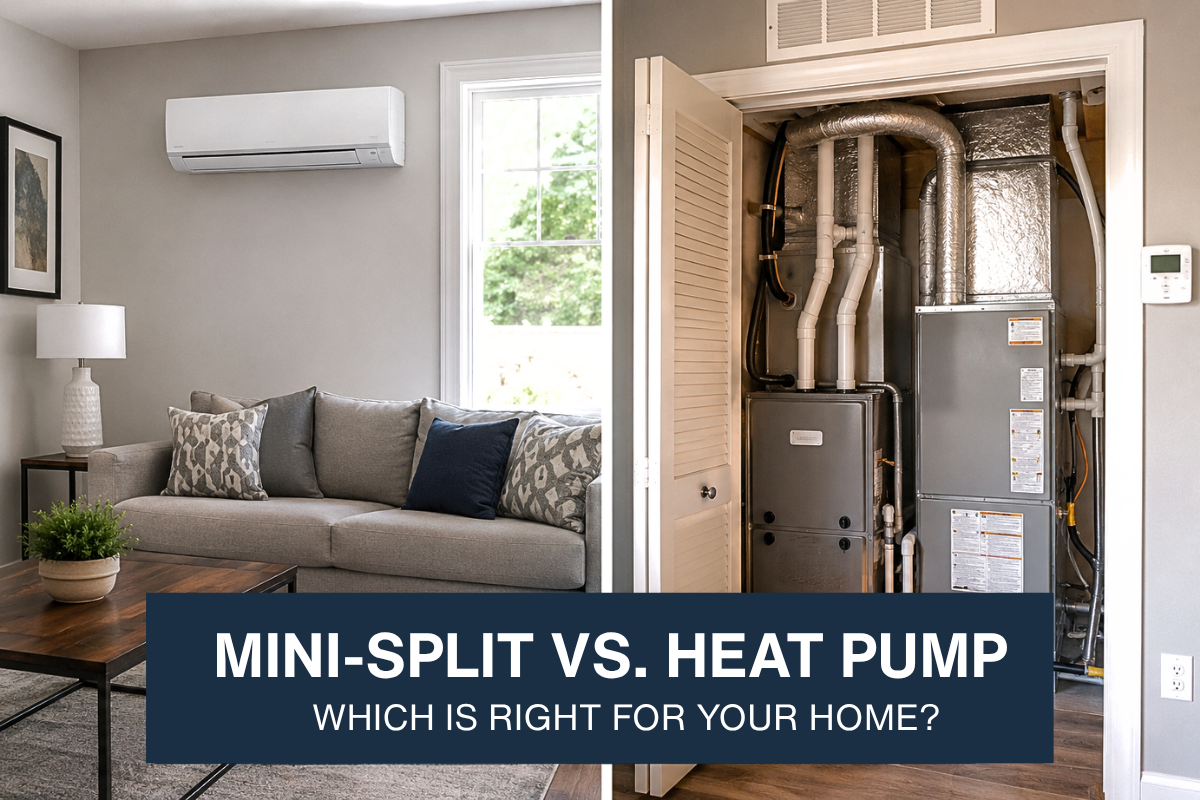
A mini-split and a heat pump are not necessarily two different technologies. Most ductless mini-splits are heat pumps. For Monterey County homeowners, the more useful comparison is usually between a centrally ducted heat pump and a ductless mini-split system.
At Carmel Valley Heating & Sheet Metal, we install and service heat pumps and mini-splits and help homeowners determine what makes sense for their property. A ducted heat pump can provide efficient whole-home heating and cooling through existing ductwork, while a mini-split delivers conditioned air directly to individual rooms or zones without traditional ducts.
Which is better depends on your home's layout, existing HVAC system, comfort needs, and where you live in Monterey County.
Heat Pump vs. Mini-Split: What's the Difference?
Both systems use heat pump technology. Rather than creating heat through combustion, they transfer heat between the indoors and outdoors. In cooler weather, the system moves heat indoors. When temperatures rise, the process reverses to provide cooling.
The main difference is how that heating and cooling reaches your rooms.
A ducted heat pump typically connects an outdoor unit to an indoor air handler. Conditioned air then travels through ductwork to supply registers throughout the home.
A ductless mini-split connects an outdoor unit to one or more indoor units located in specific rooms or zones. Refrigerant lines connect the equipment, so conventional ductwork is not required.
For homeowners comparing a heat pump vs. mini-split, that difference in air distribution often determines which option makes more sense.
Ducted Heat Pump vs. Mini-Split
| Feature | Ducted Heat Pump | Mini-Split |
|---|---|---|
| Air distribution | Existing or new ductwork | Individual indoor units |
| Best suited for | Whole-home conditioning | Zoned or ductless spaces |
| Existing ducts needed | Typically yes | No |
| Temperature control | Usually centralized | Individual zones available |
| Indoor appearance | Supply registers | Wall, floor, or ceiling units |
| Good for additions | Possible | Often a strong option |
| Installation depends on | Duct condition and home layout | Indoor unit placement and home layout |
When Does a Ducted Heat Pump Make More Sense?
A central heat pump can be an excellent option when a home already has usable ductwork and the goal is consistent heating and cooling throughout most or all of the house.
Instead of installing separate indoor units throughout the home, the system distributes conditioned air through supply registers much like a conventional central air conditioner or furnace.
A ducted heat pump may be a better fit when:
Your home already has properly sized, well-maintained ductwork
You want one system serving most of the house
You prefer traditional supply registers instead of visible indoor mini-split units
Your existing central heating or cooling equipment is due for replacement
Your home's layout works well with central air distribution
Existing ducts should not automatically be assumed to be ready for a new heat pump. Leaks, damaged sections, poor insulation, or sizing issues can affect comfort and efficiency.
Evaluating the ductwork along with the equipment gives homeowners a much better picture of how a new system is likely to perform.
When Is a Mini-Split the Better Choice?
Mini-splits become particularly useful when installing or extending ductwork would be difficult, disruptive, or unnecessary.
That can make them a strong option for older homes, additions, converted spaces, detached rooms, or houses that were not originally designed for central forced-air heating and cooling.
Mini-splits also make it possible to create separate comfort zones. Depending on the system design, multiple indoor units can serve different areas, allowing temperatures to be adjusted based on how those spaces are actually used.
A mini-split may make more sense if:
Your home does not have existing ductwork
You are remodeling or adding onto your home
Only certain rooms need additional heating or cooling
Different parts of the house have noticeably different comfort needs
Installing new ducts would require significant changes to the home
You want greater room-by-room temperature control
This flexibility can be especially useful in homes with unusual layouts where one centrally located thermostat does not accurately reflect temperatures throughout the house.
Which Is More Efficient: A Ducted Heat Pump or Mini-Split?
Neither system is automatically more efficient. Mini-splits avoid duct losses and allow zoned heating and cooling, while a properly sized ducted heat pump with well-sealed, insulated ductwork can also operate very efficiently.
Because mini-splits do not rely on traditional ductwork, they avoid energy losses that can occur when conditioned air travels through leaky or poorly insulated ducts. Zoning can also allow homeowners to focus heating and cooling on the spaces they are actually using.
A well-designed ducted heat pump can also be highly efficient, particularly when the home's ductwork is properly sized, sealed, and insulated.
Equipment efficiency ratings are only part of real-world performance. System sizing, installation quality, duct condition, equipment placement, insulation, windows, sun exposure, and the characteristics of the home all matter.
Bigger is not automatically better, either. HVAC equipment should be sized for the actual heating and cooling needs of the property. Oversized equipment can create its own comfort and performance problems.
Monterey County Homes Don't All Have the Same HVAC Needs
One reason we do not recommend the same system for every property is that conditions vary considerably throughout Monterey County.
Homes closer to Carmel-by-the-Sea, Pebble Beach, Monterey, and Pacific Grove can experience cool marine air, fog, moisture, and salt exposure. Outdoor HVAC equipment in these environments may face more corrosive conditions, making thoughtful placement and ongoing maintenance especially important.
Travel inland into Carmel Valley and the comfort needs can change. Warmer daytime temperatures can put greater emphasis on cooling performance, even though evenings may cool considerably.
The home itself matters just as much as the ZIP code. An older coastal property without ducts presents a very different HVAC project than a newer Carmel Valley home with an existing central system.
That is why the best heat pump or mini-split recommendation should start with the actual property rather than a general rule about which technology is better.
What About Homes Without Ductwork?
Homes without existing ductwork are one of the clearest situations where a mini-split may make sense.
Installing a central ducted system in a house that was never designed for ducts may require finding space in ceilings, walls, attics, or other areas for a new distribution system. Depending on the home's construction and architecture, that can add significant complexity.
A ductless mini-split eliminates the need for that network of ducts.
Only relatively small connections are required between the indoor and outdoor equipment, which can make mini-splits useful for older Monterey County properties where working around existing construction or preserving architectural details is a priority.
That does not mean every ductless home should automatically use mini-splits. The number, capacity, and placement of indoor units still need to be planned around the home's actual heating and cooling needs.
Single-Zone vs. Multi-Zone Mini-Splits
A mini-split does not have to serve only one room.
A single-zone system connects one outdoor unit with one indoor unit. This can work well for an addition, home office, guest space, converted garage, or room that consistently has different comfort needs from the rest of the house.
A multi-zone system can serve several indoor units, allowing multiple areas to have more independent temperature control.
The right configuration depends on the layout of the property. Simply adding indoor units wherever there is available wall space is not the same as designing an effective system.
Room size, insulation, windows, sun exposure, ceiling height, occupancy, and how air moves between spaces all influence equipment selection and placement.
How Do the Installation Requirements Compare?
The existing home often determines which installation is more straightforward.
If usable ductwork is already in place, a ducted heat pump may allow the home to continue using its existing air distribution system.
If there are no ducts, a mini-split can avoid the work required to build an entirely new duct network.
Either system still requires careful planning. The contractor needs to determine appropriate capacity, identify suitable equipment locations, plan refrigerant and condensate lines, and make sure the completed system can meet the home's heating and cooling needs.
For a ducted heat pump, the condition and design of the ductwork become particularly important. For a mini-split, indoor unit selection and placement take on a larger role.
Can a Home Use Both?
Yes. For some Monterey County homes, the best solution does not have to be entirely ducted or entirely ductless.
A house may already have a central HVAC system serving the main living areas but have an addition, converted room, guest space, or other area that the existing ductwork does not serve effectively. A mini-split can sometimes provide targeted heating and cooling for that space without requiring major changes to the rest of the system.
This is another reason to evaluate the entire property before choosing equipment. The goal is comfortable, efficient heating and cooling, not forcing every room into the same system design.
Choosing the Right Heat Pump System Starts With Your Home
When comparing a heat pump vs. mini-split, there is no single option that is better for every Monterey County home. Existing ductwork, floor plan, coastal exposure, temperature patterns, comfort preferences, and how different spaces are used should all factor into the decision.
A ducted heat pump can be a strong choice for centralized whole-home comfort when suitable ductwork is already available. A mini-split offers flexibility for ductless homes, additions, individual rooms, and zoned comfort.
Carmel Valley Heating & Sheet Metal works with homeowners throughout Monterey County to evaluate these factors and determine which heating and cooling approach makes sense for the property.
Considering a heat pump or mini-split for your home? Contact Carmel Valley Heating & Sheet Metal or call (831) 298-9922 to discuss your home and find the right heating and cooling system for your needs.
Frequently Asked Questions About Heat Pumps and Mini-Splits
Is a mini-split the same thing as a heat pump?
A mini-split is a type of HVAC system, and most ductless mini-splits use heat pump technology to provide both heating and cooling. The term "heat pump" can describe both ducted and ductless systems, while "mini-split" generally refers to a system that conditions individual rooms or zones without traditional ductwork.
Is a heat pump or mini-split better for a whole house?
It depends on the home. A ducted heat pump can be a strong whole-home solution when suitable ductwork already exists. A multi-zone mini-split can also serve multiple areas of a house, particularly when the property does not have ducts. The layout and heating and cooling requirements should determine the system design.
Are mini-splits more efficient than ducted heat pumps?
Not necessarily. Mini-splits eliminate potential energy losses associated with ductwork and can provide efficient zoned heating and cooling. However, a properly designed ducted heat pump with well-sealed and insulated ducts can also be highly efficient. Equipment selection, sizing, installation quality, and the home's characteristics all affect real-world efficiency.
Do mini-splits work well in Monterey County?
Mini-splits can be a good fit for many Monterey County homes, particularly older properties without ductwork, additions, individual rooms, and homes where zoned temperature control is useful. The right equipment and configuration depend on the property's location, layout, exposure, and comfort requirements.
Can a mini-split heat and cool multiple rooms?
Yes. Multi-zone mini-split systems can connect multiple indoor units to outdoor equipment, allowing different areas of the home to receive heating and cooling. The number and placement of indoor units should be designed around the home's actual heating and cooling loads rather than simply placing a unit in every room.
Do I need existing ductwork for a heat pump?
Not necessarily. Ducted heat pumps use ductwork, but ductless mini-splits also operate using heat pump technology and do not require a conventional duct system. For homes without ducts, a mini-split may avoid the construction required to add an entirely new air distribution system.
Can I add a mini-split to a home that already has central HVAC?
Yes. In some homes, a mini-split can supplement an existing central HVAC system. This can be useful for additions, converted garages, guest rooms, home offices, or other areas that are difficult for the existing ducted system to heat or cool effectively.
How do I know whether a ducted heat pump or mini-split is right for my home?
Start with the property rather than the equipment. Existing ductwork, floor plan, room usage, insulation, windows, coastal exposure, comfort concerns, and heating and cooling needs can all affect the decision. A professional evaluation can determine which system type and configuration make the most sense for the home.
Ready to Find the Right System for Your Home?
Every home has different heating and cooling needs. Carmel Valley Heating & Sheet Metal can evaluate your property, existing HVAC system, and comfort priorities to help you determine whether a ducted heat pump or ductless mini-split is the better fit.